From Japanese Tea Farm to Your Café: The Journey of a Matcha Order

Short answer: A matcha order travels through eight stages: spring harvest, steaming and drying into tencha, de-stemming and cold storage, milling, packing, export documentation, international transport and customs clearance, and final delivery. The leaf is harvested once a year, but when matcha is milled to order, the powder you receive can be only days or weeks old.
Key takeaways
- Tea is harvested once a year for first-flush matcha, so tencha is stored as leaf and milled through the year.
- Milling to order keeps the time between grinding and use short.
- For US shipments, the facility must be FDA-registered, prior notice must be filed, and the importer needs an FSVP.
- Air freight can deliver in around ten days; sea freight is cheaper but slower.
- Each handoff is a point where freshness and documentation can be lost or protected.
Stage 1: Harvest (April to May)
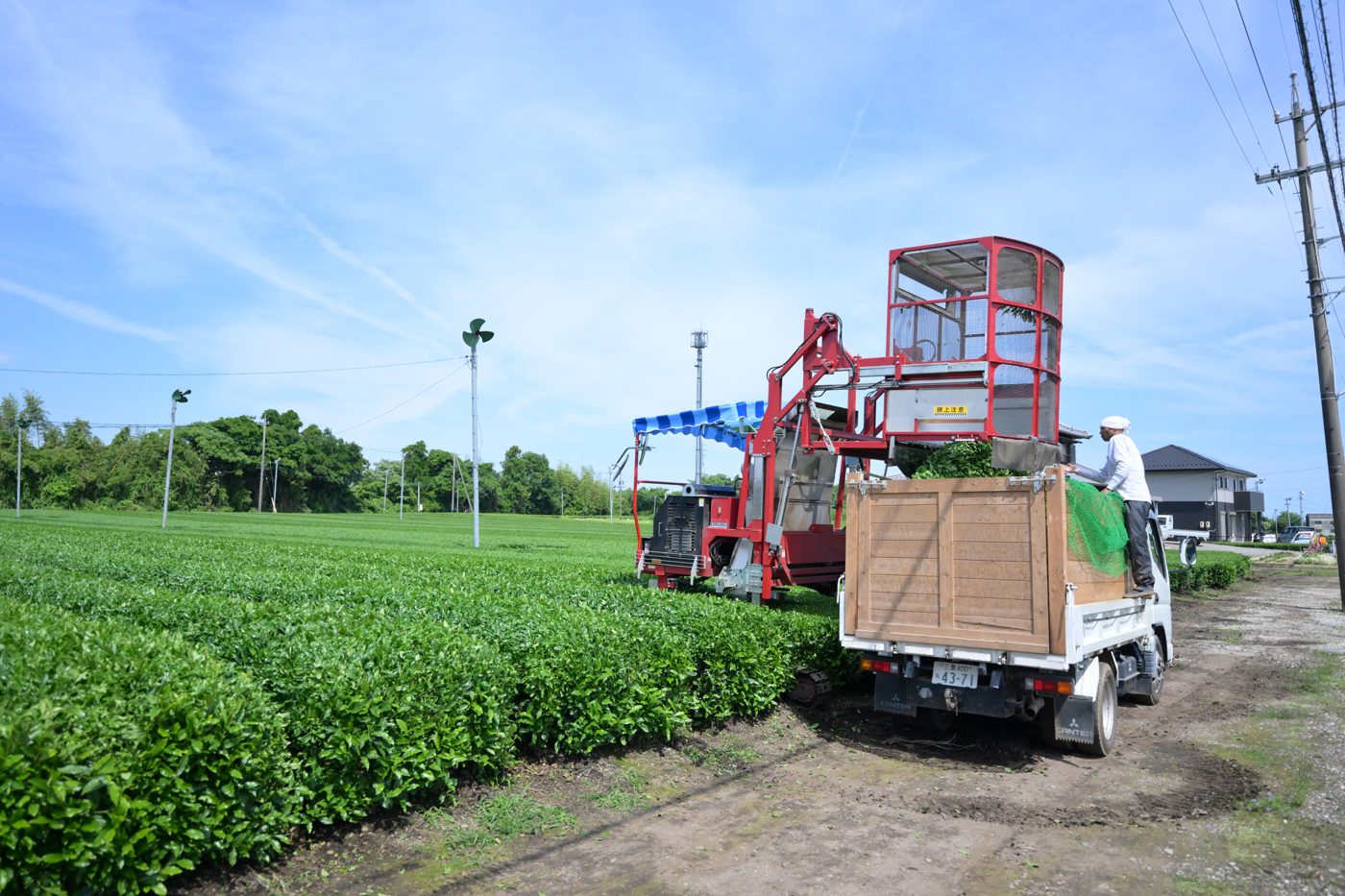
First-flush leaves are harvested after weeks of shading. Timing is chosen by watching bud development and weather.
Stage 2: Steaming and drying into tencha (same day)
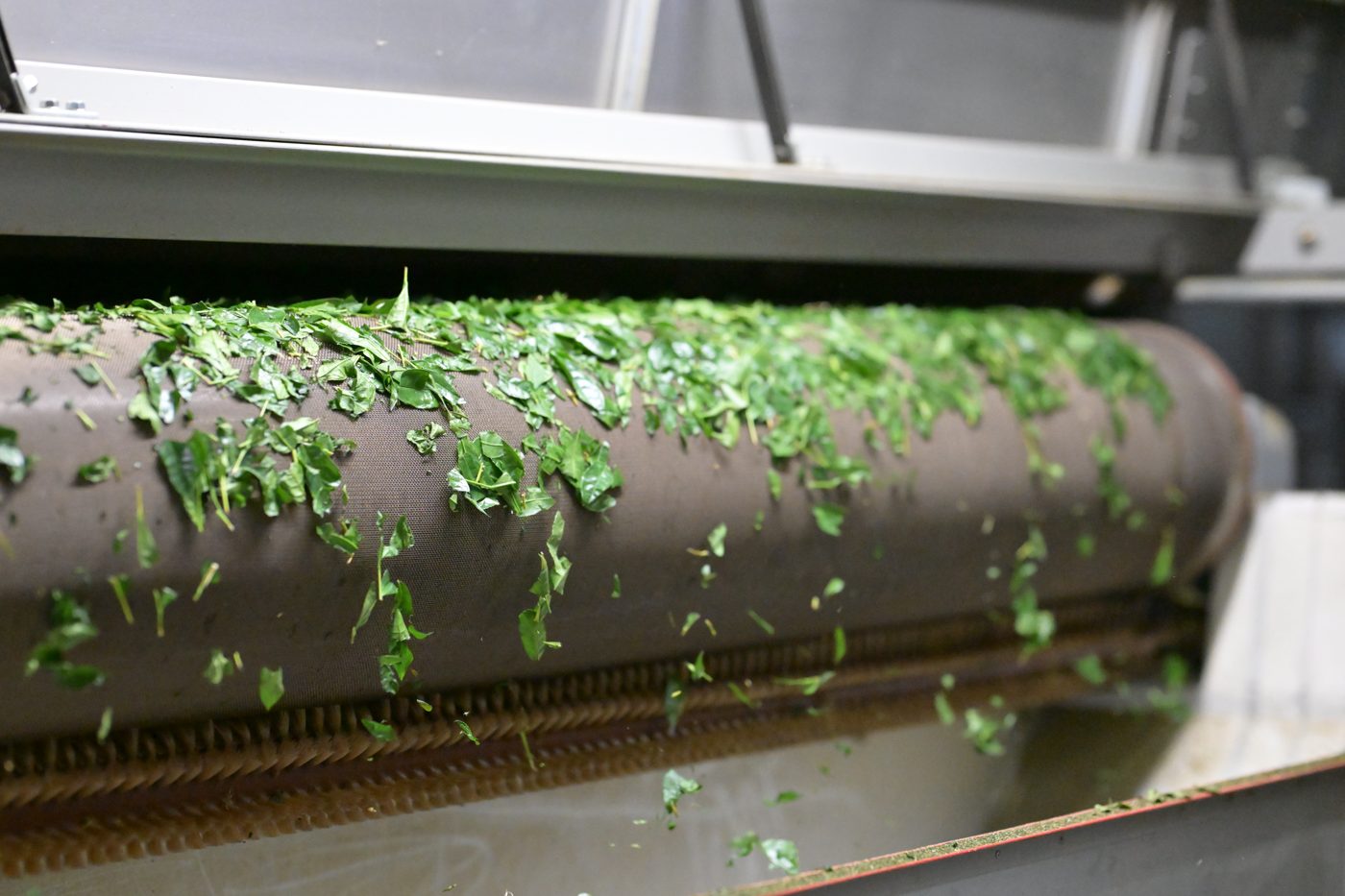
Leaves go to a nearby factory and are steamed within hours to stop oxidation, then cooled and dried flat in a tall drying furnace. The result is aracha tencha, the crude dried leaf.
Stage 3: Refining and cold storage
Stems and veins are removed, leaving refined tencha. Because tencha is far more stable than powder, it is packed and kept in cold storage, preserving the spring harvest for the year ahead.
Stage 4: Milling (after your order)
When an order is confirmed, tencha is taken from cold storage and milled into matcha. Milling to order, rather than holding finished powder for months, protects color and aroma.
Stage 5: Inspection and packing
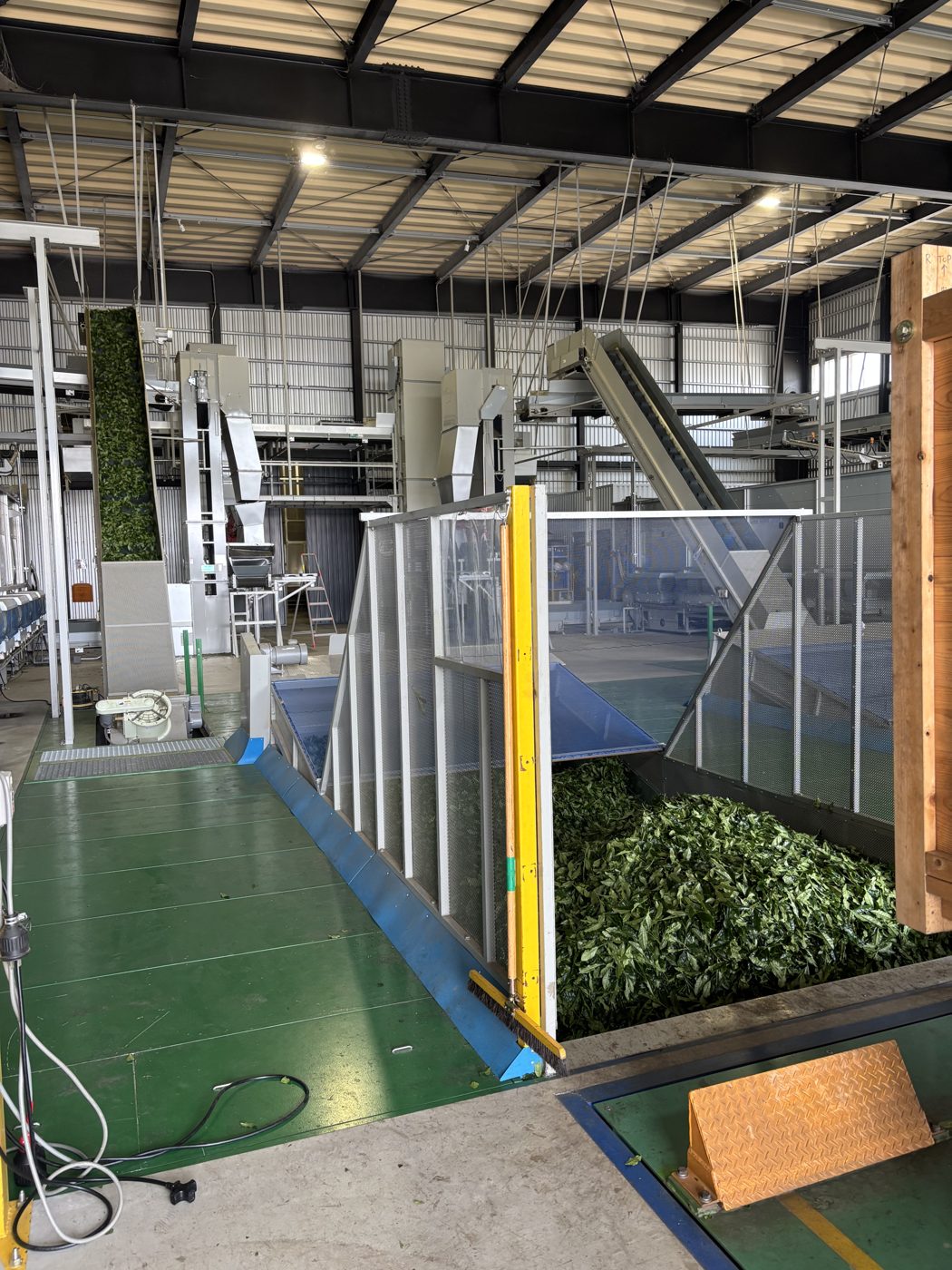
Each lot is checked for color, aroma, taste and texture, then packed in light-proof, airtight bags, typically 1 kg for wholesale.
Stage 6: Export documentation
For the United States, the milling and packing facility must be registered with the FDA, prior notice must be submitted before arrival, and the US importer must maintain a Foreign Supplier Verification Program (FSVP). For the UK and EU, residue testing against local limits and origin documentation for preferential tariffs are key.
Stage 7: Transport and customs
Air freight is fastest and suits fresh, relatively small, high-value shipments. Sea freight lowers cost for large volumes but adds weeks. Customs clearance times vary by destination and broker.
Stage 8: Delivery and storage at the café
On arrival, matcha should go straight into cool, dry storage, with each pack brought to room temperature before opening.
How Origin Leaf Japan runs this chain
Three partners share the work. Our grower in Suzuka, Mie, cultivates Okumidori and Yabukita and processes tencha at its own factory beside the fields. Our processing partner, whose parent company specializes in fertilizers and soil analysis, mills and packs the matcha at an FDA-registered facility. Origin Leaf Japan manages international sales and export, including FSVP-ready documentation and coordination with a US agent. Because we mill after your order, matcha can arrive in as little as 10 days, depending on destination, volume and customs clearance.
Frequently asked questions
Q: How old is the matcha when it reaches a café?
A: It depends on the supply chain. Milled-to-order matcha shipped by air can arrive within weeks of milling; matcha held as powder in warehouses may be months old.
Q: Is air freight worth it for matcha?
A: For freshness and fast restocking, often yes. For very large, regular volumes, sea freight with good planning can reduce cost.
Q: What documents should a café importing directly expect?
A: Commercial invoice, packing list, certificate of origin where relevant, specifications, and supporting information for FSVP or residue compliance.
Sources and further reading: US FDA, Food Facility Registration, Prior Notice and FSVP; European Commission and UK MRL resources.
Serving matcha in your café or building a matcha brand? Origin Leaf Japan supplies first-flush, single-origin matcha from Suzuka, Mie, to cafés, retailers, distributors and food manufacturers, milled to order with a 5 kg minimum, 1 kg packs, and delivery in as little as 10 days. Request a quote or samples →
MORE IN C
Origin, Farmers and the Tea Industry
- 21 How Japanese People See the Global Matcha Boom
- 19 Who Will Grow Japan's Tea? The Succession Crisis on Japanese Tea Farms
- 18 The Hidden World of Japanese Tea Farmers: What Growers Rarely Talk About
- 17 Suzuka, Mie: The Origin Behind Our Matcha