Why Fertilizer Unlocks a Tea Cultivar's Full Potential

Short answer: A cultivar sets a tea plant's potential, but soil and fertilizer decide how much of that potential reaches the leaf. Tea plants build L-theanine, the amino acid behind matcha's umami, in their roots from nitrogen absorbed from the soil, and then send it to the new shoots. Well-planned fertilization, based on soil analysis rather than habit, raises amino acids and quality while avoiding the environmental damage caused by excess nitrogen.
Key takeaways
- L-theanine is synthesized in tea roots from absorbed nitrogen and transported to young shoots.
- Nitrogen supply, together with shading, strongly influences umami, sweetness and color.
- Japanese tea fields were historically heavily fertilized, and excess nitrogen has leached into groundwater.
- Research in Shizuoka found that reducing annual nitrogen from 54 kg to 40 kg per 10 ares did not reduce yield or quality over eight years.
- Soil analysis and tailored, often organic, fertilizer blends let growers feed precisely what each field needs.
How tea turns nitrogen into umami
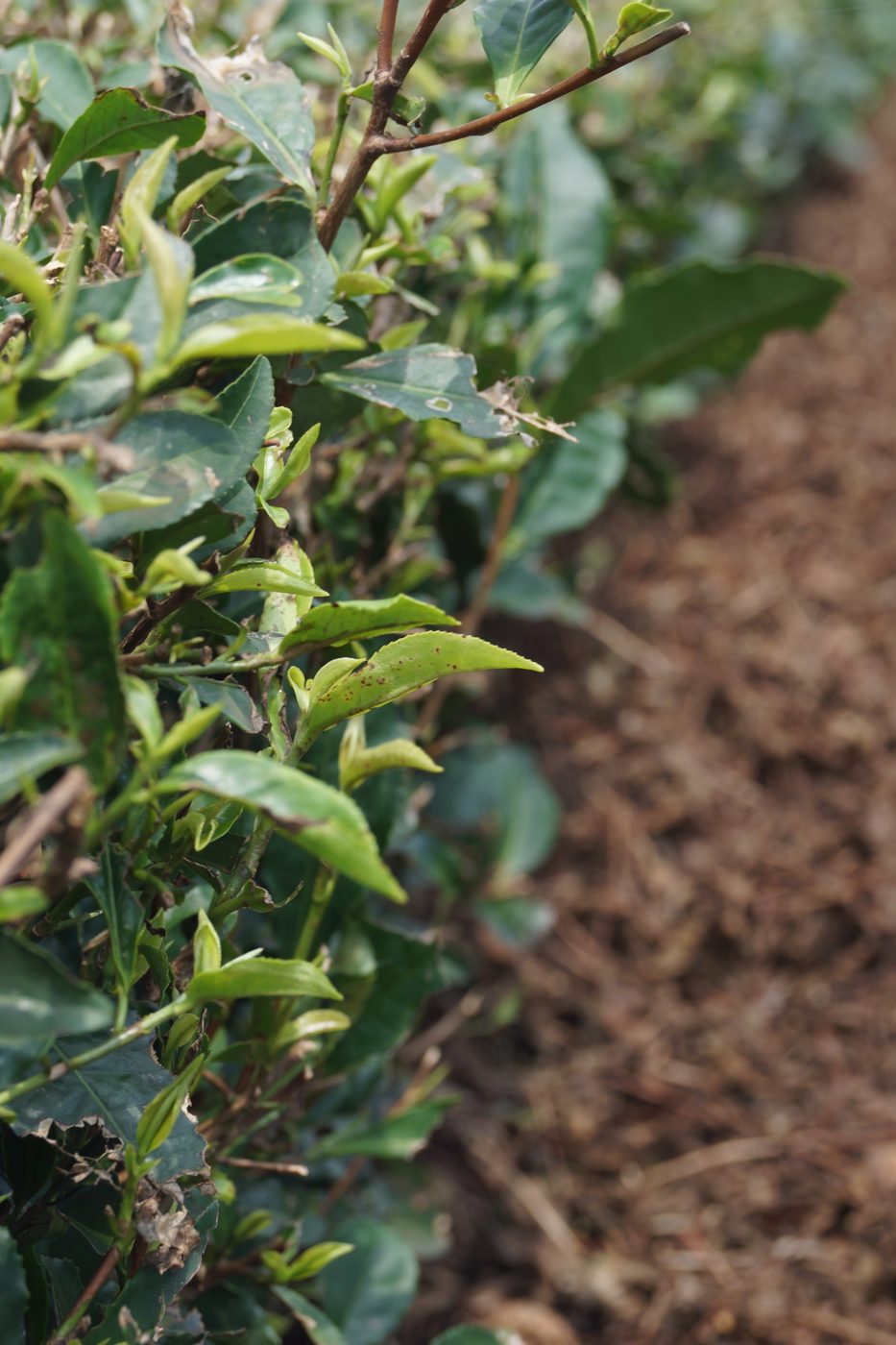
Tea plants absorb nitrogen from the soil, mainly as ammonium and nitrate. In the roots, they combine nitrogen compounds to form L-theanine, an amino acid found almost exclusively in tea. L-theanine is then carried up to the new shoots, where it contributes savory umami and sweetness. That is why nitrogen nutrition, especially before the spring flush, is so closely linked to the quality of first-flush tea.
Shading then protects this investment. In sunlight, leaves convert L-theanine into catechins; under shade, more of it remains. Fertilization and shading work as a pair: one builds amino acids, the other preserves them.
The problem with "more is better"
Because nitrogen improves taste and yield, Japanese tea growing long relied on heavy fertilization. Surplus nitrogen that the plant cannot use leaches out of the soil, raising nitrate levels in groundwater and rivers. Research by Shizuoka Prefecture reported that fields receiving 54 kg of nitrogen per 10 ares per year showed nitrate and nitrite concentrations exceeding environmental standards over time. In the same research program, fields receiving 40 kg per 10 ares for eight years showed no loss of first- or second-flush yield or quality. In other words, more fertilizer does not automatically mean better tea.
Soil analysis: feeding the field, not the calendar
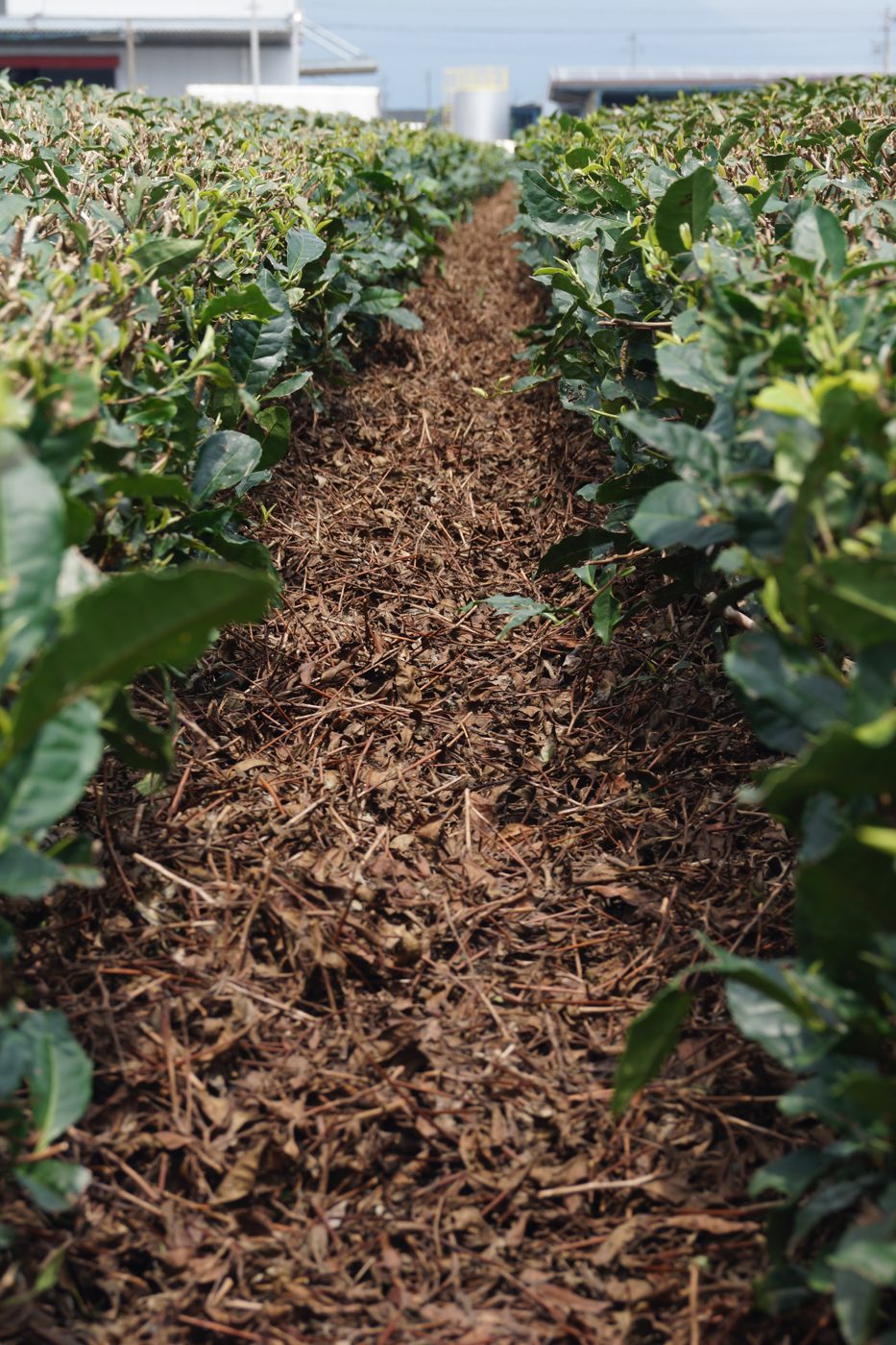
Every field differs in soil type, pH, organic matter and nutrient balance. Applying the same fertilizer everywhere can leave some fields short of what they need and others overloaded. Modern practice starts with soil analysis, then designs a fertilizer program for each field: the amount and type of nitrogen, phosphorus, potassium, magnesium and trace elements, and the timing of applications through the year.
Organic fertilizers, such as plant-based meals and composts, release nutrients gradually and support soil biology. Many quality-focused growers combine them with targeted mineral nutrients.
Beyond nitrogen
- Soil pH: Tea prefers acidic soil, but excessive acidification, often caused by heavy fertilization, harms roots and nutrient uptake.
- Magnesium: Central to chlorophyll, and therefore to color.
- Root health: Healthy roots are essential for theanine synthesis; compacted or waterlogged soils reduce it.
How this shapes Origin Leaf Japan's matcha
Our processing partner's parent company specializes in fertilizers. It analyzes the soil in our grower's fields in Suzuka, Mie, and designs organic-based fertilizer blends and application schedules for each field. The goal is simple: to let Okumidori and Yabukita express their full flavor while protecting the soil and water around the tea fields.
Frequently asked questions
Q: Does organic fertilizer make tea taste better?
A: Not automatically. What matters is supplying the right nutrients at the right time. Organic fertilizers help build soil health and release nutrients gradually.
Q: Is matcha grown with heavy fertilizer unsafe?
A: Not inherently. The main concerns with excess nitrogen are environmental and soil health. Buyers should still check residue testing and farm certifications.
Q: Does fertilizer affect color?
A: Yes. Nitrogen and magnesium both contribute to chlorophyll, which drives matcha's green color.
Sources and further reading: Shizuoka Prefectural Research Institute of Agriculture and Forestry, research on reduced nitrogen application in tea fields; plant science literature on theanine biosynthesis in Camellia sinensis.
Serving matcha in your café or building a matcha brand? Origin Leaf Japan supplies first-flush, single-origin matcha from Suzuka, Mie, to cafés, retailers, distributors and food manufacturers, milled to order with a 5 kg minimum, 1 kg packs, and delivery in as little as 10 days. Request a quote or samples →
MORE IN B
Cultivars, Cultivation and Craft
- 15 Why Japanese Tea Tastes Different from Chinese Tea
- 14 Why Stone-Milled Matcha Tastes Better: The Science of Particle Size Distribution
- 12 A Short History of Tea Plant Breeding in Japan
- 11 Okumidori vs. Yabukita: Flavor, Color and Best Uses Compared