Why Japanese Farmers Grow Matcha in the Shade

Short answer: Japanese farmers cover tea bushes for matcha for roughly three weeks or more before the spring harvest because shade changes the chemistry of the leaf. With less sunlight, the plant keeps more L-theanine and other amino acids, which give umami and sweetness, and converts less of them into bitter catechins. It also produces more chlorophyll, which makes the leaves, and the matcha, a deep, vivid green.
Key takeaways
- Tea for matcha (tencha) is typically shaded for around three weeks or longer; kabusecha is shaded for about one to two weeks.
- Shading slows the conversion of L-theanine into catechins, keeping umami high and bitterness low.
- Chlorophyll increases in low light, deepening the green color.
- Shade also creates a distinctive "covered" aroma known in Japanese as ooika.
- Shading takes labor and materials, which is one reason matcha costs more than other green teas.
What happens inside a tea leaf in sunlight
Tea plants make L-theanine, an amino acid found almost only in tea, in their roots and send it to the new shoots. In strong sunlight, the leaves break L-theanine down and use it to build catechins, the polyphenols responsible for astringency and bitterness. That is why tea grown in full sun, such as most sencha, tastes brisker and more astringent.
What shading changes
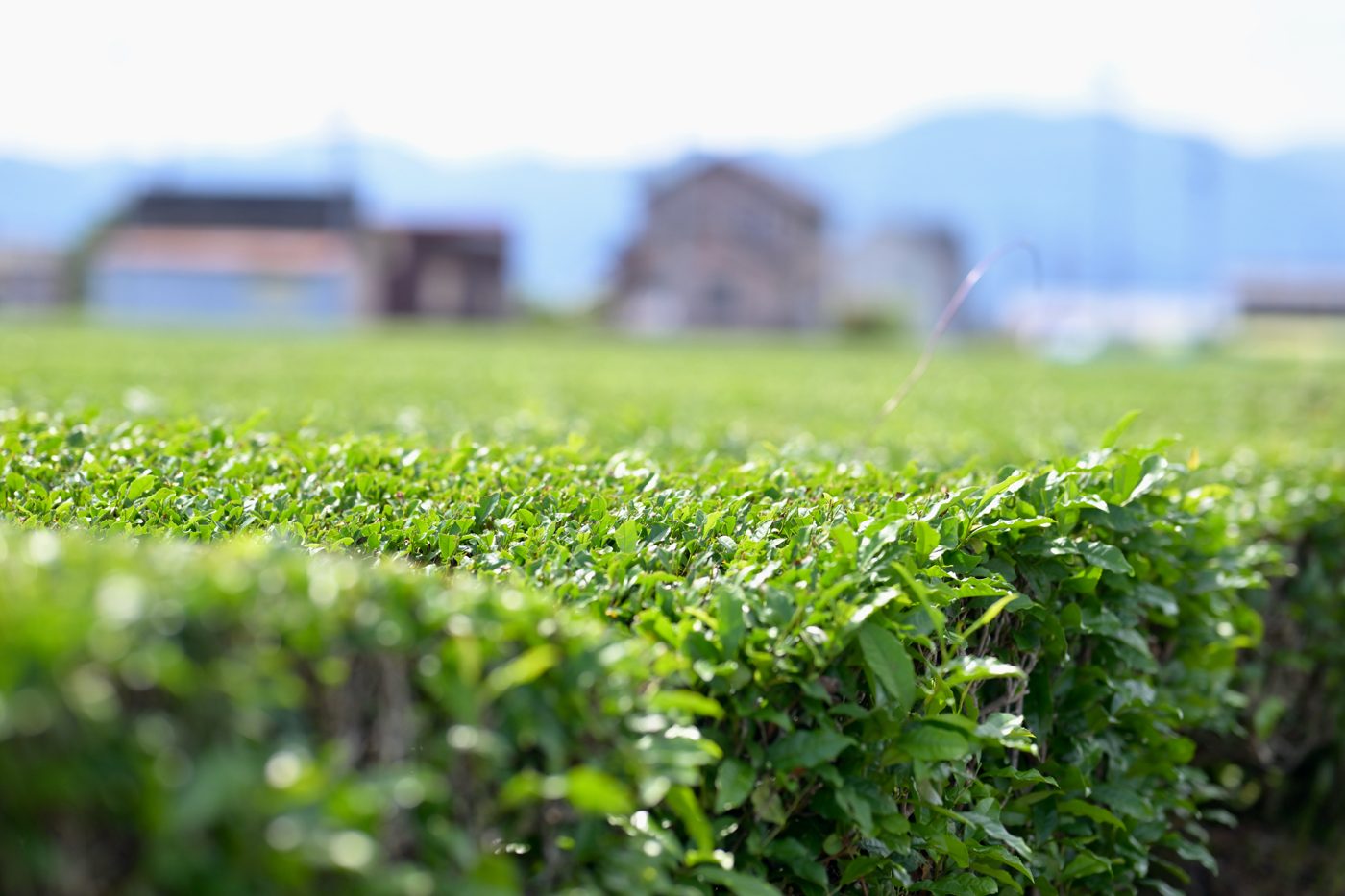
When the bushes are covered:
- Amino acids stay high. Less light means less conversion of L-theanine into catechins, so the leaf keeps more umami and natural sweetness.
- Catechins stay lower. Bitterness and astringency are reduced.
- Chlorophyll rises. The plant compensates for low light by producing more chlorophyll, which gives the deep green color.
- Leaves become thinner and softer. This helps produce a fine, silky powder.
- A distinct aroma develops. Shaded tea develops a soft, sweet, slightly marine scent, often called ooika (covered aroma).
How farmers shade tea
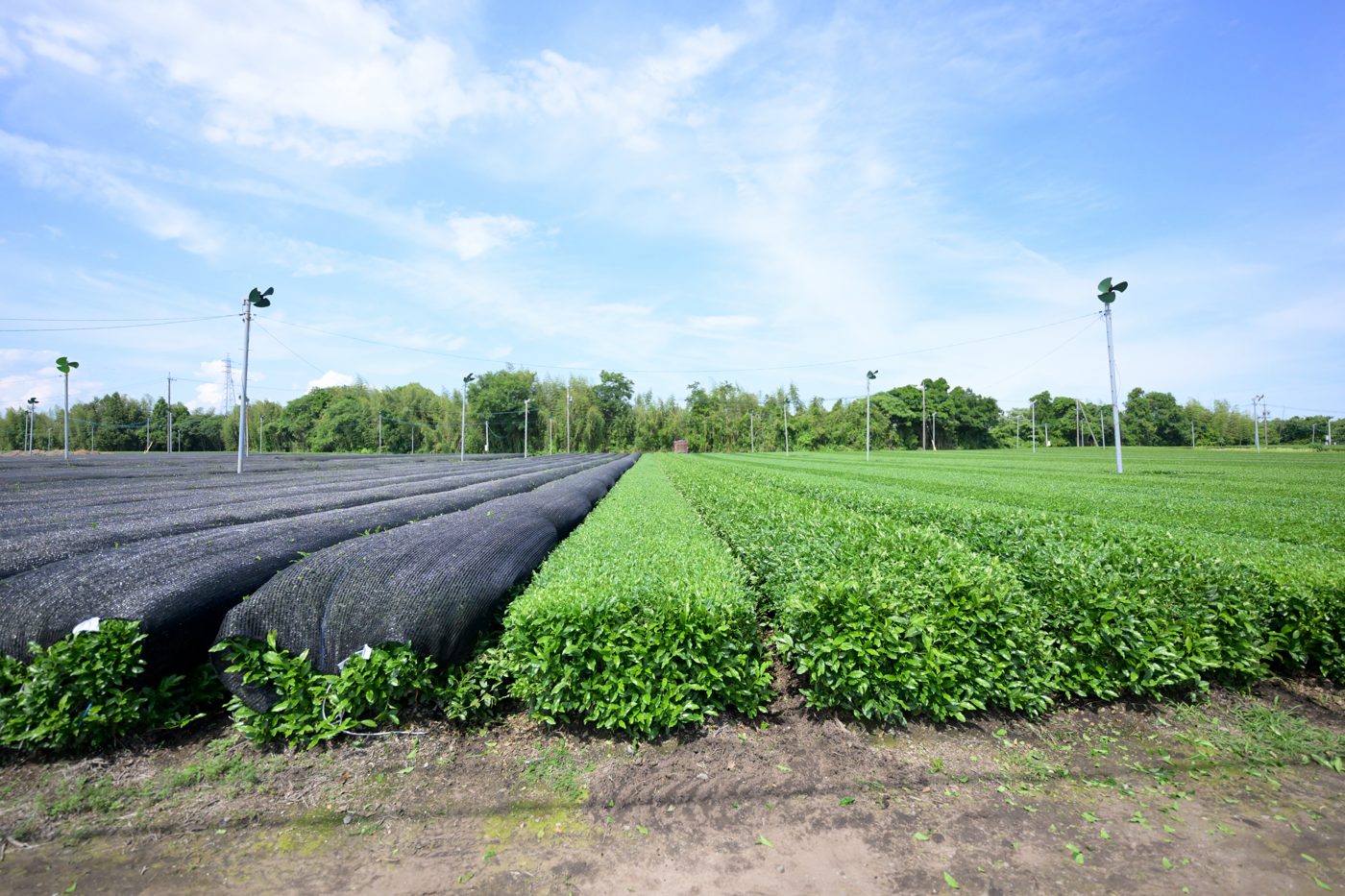
- Traditional honzu shading: A frame is built over the field and covered with reed screens and then layers of rice straw. It creates very deep, gradual shade and is still used for some of the finest Uji tea. It is labor-intensive.
- Overhead trellis (tana) with synthetic cloth: Black screens are stretched over a frame above the bushes, often in two layers, increasing shade in stages.
- Direct covering (jikagise): Cloth is laid directly on the bushes. It is quicker and cheaper and is common for kabusecha and some tencha, but it gives less control.
Farmers typically start with partial shade and increase it to block most of the sunlight as harvest approaches. The timing and depth of shading are decided by watching the buds and the weather, not by a fixed calendar.
The trade-offs
Shading is not free. It costs materials and labor, and keeping a plant in low light for long periods stresses it, which can affect yield and the bush's health in later seasons. That is why farmers must balance flavor, yield and plant health, and why fully shaded first-flush tencha is one of the most expensive tea materials in Japan.
Why it matters to buyers
When a supplier says a matcha is "shade-grown," ask how long and by which method. Longer, deeper shading of first-flush leaves generally means more umami, less bitterness and a greener color. At Origin Leaf Japan, our tea in Suzuka, Mie, comes from a region with long experience in shaded tea: northern Mie is Japan's leading producer of kabusecha.
Frequently asked questions
Q: Is all matcha shade-grown?
A: Authentic matcha is made from shaded tencha. Powders made from unshaded tea are sometimes sold as matcha, but they are not the same product.
Q: Does shading reduce caffeine?
A: No, shaded young leaves typically remain relatively high in caffeine. Shading mainly affects amino acids, catechins and chlorophyll.
Q: What is the difference between gyokuro and matcha?
A: Both are shaded. Gyokuro is rolled into needle-shaped leaves for brewing, while tencha is dried flat, de-stemmed and milled into matcha.
Sources and further reading: Japan Ministry of Agriculture, Forestry and Fisheries, "Ise Cha"; plant physiology research on theanine biosynthesis and shading in Camellia sinensis.
Serving matcha in your café or building a matcha brand? Origin Leaf Japan supplies first-flush, single-origin matcha from Suzuka, Mie, to cafés, retailers, distributors and food manufacturers, milled to order with a 5 kg minimum, 1 kg packs, and delivery in as little as 10 days. Request a quote or samples →
MORE IN A
Matcha Fundamentals
- 09 How to Store Matcha to Protect Its Flavor and Color
- 08 Freshly Ground Matcha: Why Freshness Matters More Than You Think
- 07 How to Spot High-Quality Matcha Before You Buy
- 06 Why Is Some Matcha $20 and Others $200?