How to Store Matcha to Protect Its Flavor and Color

Short answer: Store matcha sealed, cold, dark and dry. Keep unopened packs in the refrigerator, let a cold pack warm to room temperature before opening so moisture does not condense on the powder, and keep a small daily-use amount in an airtight, opaque container away from heat. Use opened matcha within a few weeks.
Key takeaways
- Matcha's enemies are oxygen, light, heat, humidity and odors.
- Unopened: refrigerator (or freezer for long-term stock), in the original sealed pack.
- Opened: airtight, opaque container, cool place, used within a few weeks.
- Always bring cold matcha to room temperature before opening.
- Never store matcha above an espresso machine or near a stove.
Why storage matters so much
Matcha is a very fine powder with an enormous surface area. Oxygen and light break down chlorophyll, turning the green toward olive and brown, while aroma compounds escape and flavor flattens. Heat and humidity accelerate both, and matcha readily absorbs smells from its surroundings.
Storing unopened matcha
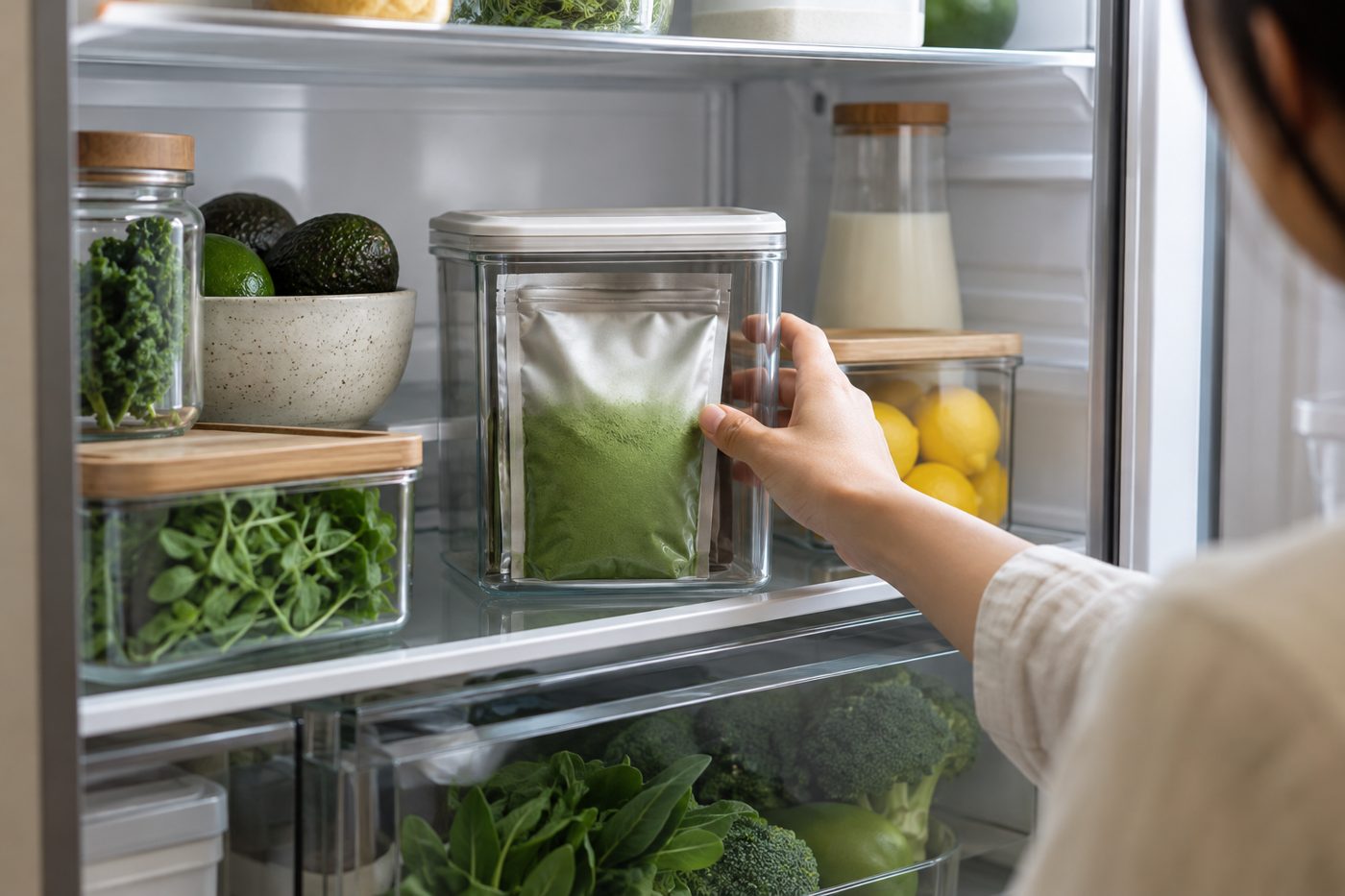
- Keep it in the original, sealed, light-proof packaging.
- Refrigerate if you will use it within a few months. For longer storage, freezing is common.
- Place the pack inside an extra zip bag or airtight box to protect it from odors in the fridge.
- Check the best-before date and rotate stock.
The condensation rule
The biggest storage mistake is opening cold matcha straight away. Warm, humid air hits the cold powder and moisture condenses on it, causing clumps and faster deterioration. Take the sealed pack out and leave it at room temperature for a few hours (longer for frozen or large packs) before opening.
Storing opened matcha
- Transfer a week's or two weeks' worth into a small airtight, opaque canister. A tea caddy (natsume or chazutsu) with an inner lid works well.
- Squeeze the air out of the main pack and reseal it tightly, then return it to cold storage.
- Keep the daily canister in a cool, dark cupboard rather than the fridge, so you avoid repeated warming and cooling.
- Use a clean, dry spoon every time.
Storage for cafés
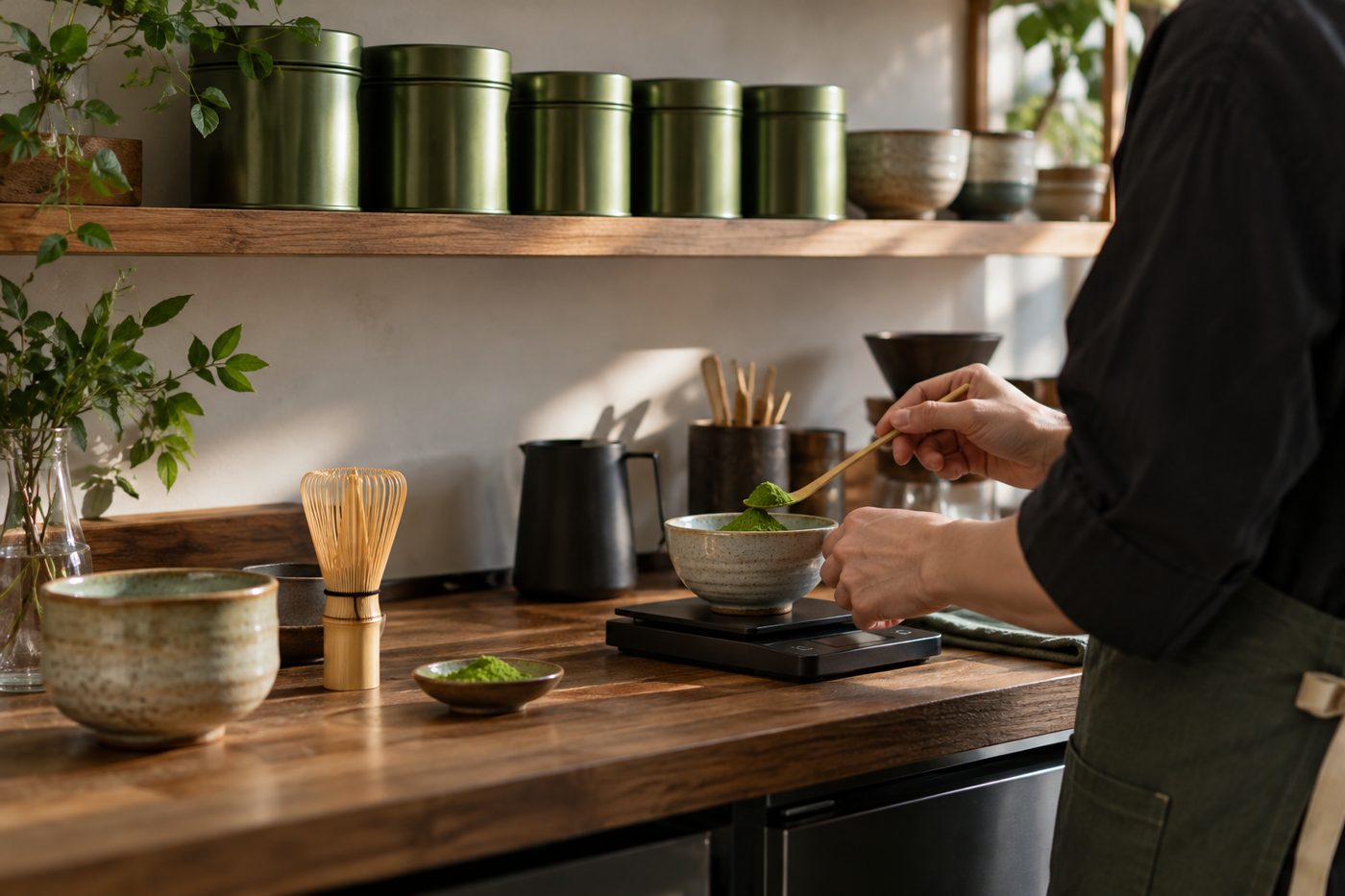
- Store bulk stock cold and sealed; bring each pack to room temperature before opening.
- Decant only what the bar will use in a few days into an airtight container.
- Keep matcha away from espresso machines, ovens and sunny windows.
- Label each pack with its opening date and use first in, first out.
- If you pre-batch matcha concentrate, make small batches, refrigerate, and use within a few hours.
How long does matcha last?
Unopened, properly stored matcha usually carries a best-before date of several months to about a year, depending on the producer. Quality is highest soon after milling, so fresher is better. Once opened, aim to use it within two to four weeks.
Signs your matcha has deteriorated
Dull olive or yellowish color, a hay-like or dusty smell, flat or harsher taste, and clumping from moisture.
Frequently asked questions
Q: Can I store matcha in the freezer?
A: Yes, for unopened long-term stock. Let it reach room temperature before opening.
Q: Is a glass jar good for matcha?
A: Only if it is opaque or kept in the dark. Clear jars expose matcha to light.
Q: Does matcha go bad?
A: Stored dry, it does not usually become unsafe quickly, but its color, aroma and taste decline. Follow the best-before date.
Sources and further reading: Global Japanese Tea Association storage guidance; producer best-before practices.
Serving matcha in your café or building a matcha brand? Origin Leaf Japan supplies first-flush, single-origin matcha from Suzuka, Mie, to cafés, retailers, distributors and food manufacturers, milled to order with a 5 kg minimum, 1 kg packs, and delivery in as little as 10 days. Request a quote or samples →
MORE IN A
Matcha Fundamentals
- 08 Freshly Ground Matcha: Why Freshness Matters More Than You Think
- 07 How to Spot High-Quality Matcha Before You Buy
- 06 Why Is Some Matcha $20 and Others $200?
- 05 First Harvest vs. Second Harvest Matcha: What's the Difference?