The Café Matcha Latte Playbook: Dosing, Milk Pairing and Cost per Cup

Short answer: A consistent café matcha latte comes down to four controls: a fixed dose (commonly 2 to 4 g), water below boiling (around 70 to 80 °C), a lump-free preparation method, and a milk that complements your matcha. Calculate cost per cup from your price per kilogram and dose, and standardize the recipe so every barista makes the same drink.
Key takeaways
- Weigh matcha; do not scoop by eye.
- Sift or use a method that eliminates clumps.
- Use water below boiling to avoid bitterness and browning.
- Test your matcha with each milk you offer.
- Track cost per cup, not cost per kilogram.
Choose your dose
Many cafés use 2 g of matcha for a 12 oz (about 350 ml) latte and 3 to 4 g for a stronger drink or a larger cup. Decide on a house standard, weigh it, and train every barista to it. Inconsistent dosing is the most common cause of complaints about matcha drinks.
Water temperature and ratio
Use about 30 to 60 ml of water at 70 to 80 °C (160 to 175 °F) to make a concentrated matcha base. Boiling water extracts more bitterness and accelerates color loss.
Preparation methods
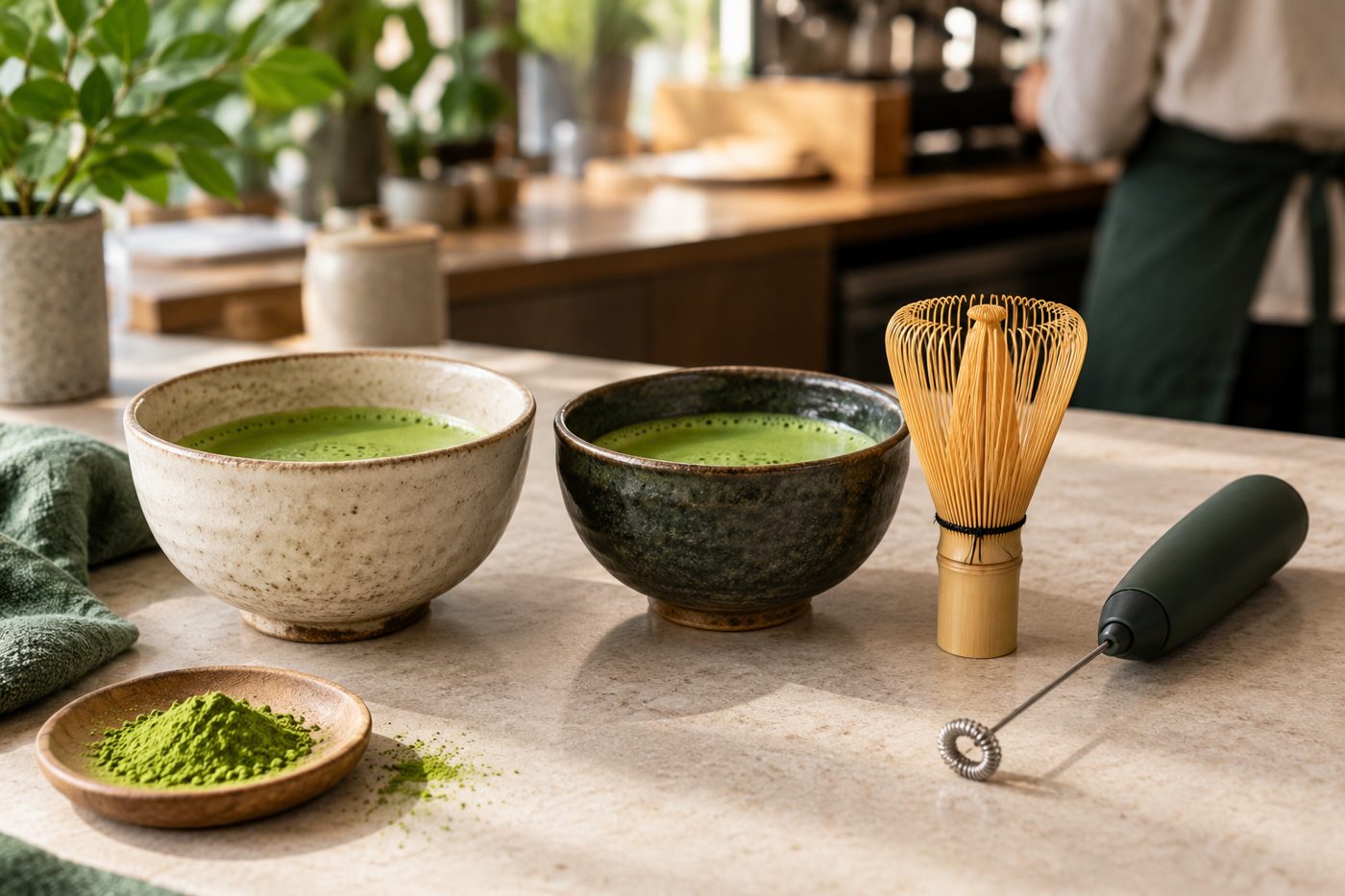
- Bamboo whisk (chasen): Traditional and excellent, but slower at volume.
- Handheld frother: Fast and consistent for busy bars.
- Shaker or blender: Good for iced drinks; ensures a lump-free base.
- Pre-batched matcha concentrate: Saves time, but make small batches, refrigerate, and use within a few hours, because color and flavor fade.
Always sift matcha or use a method that prevents clumps.
Milk pairing
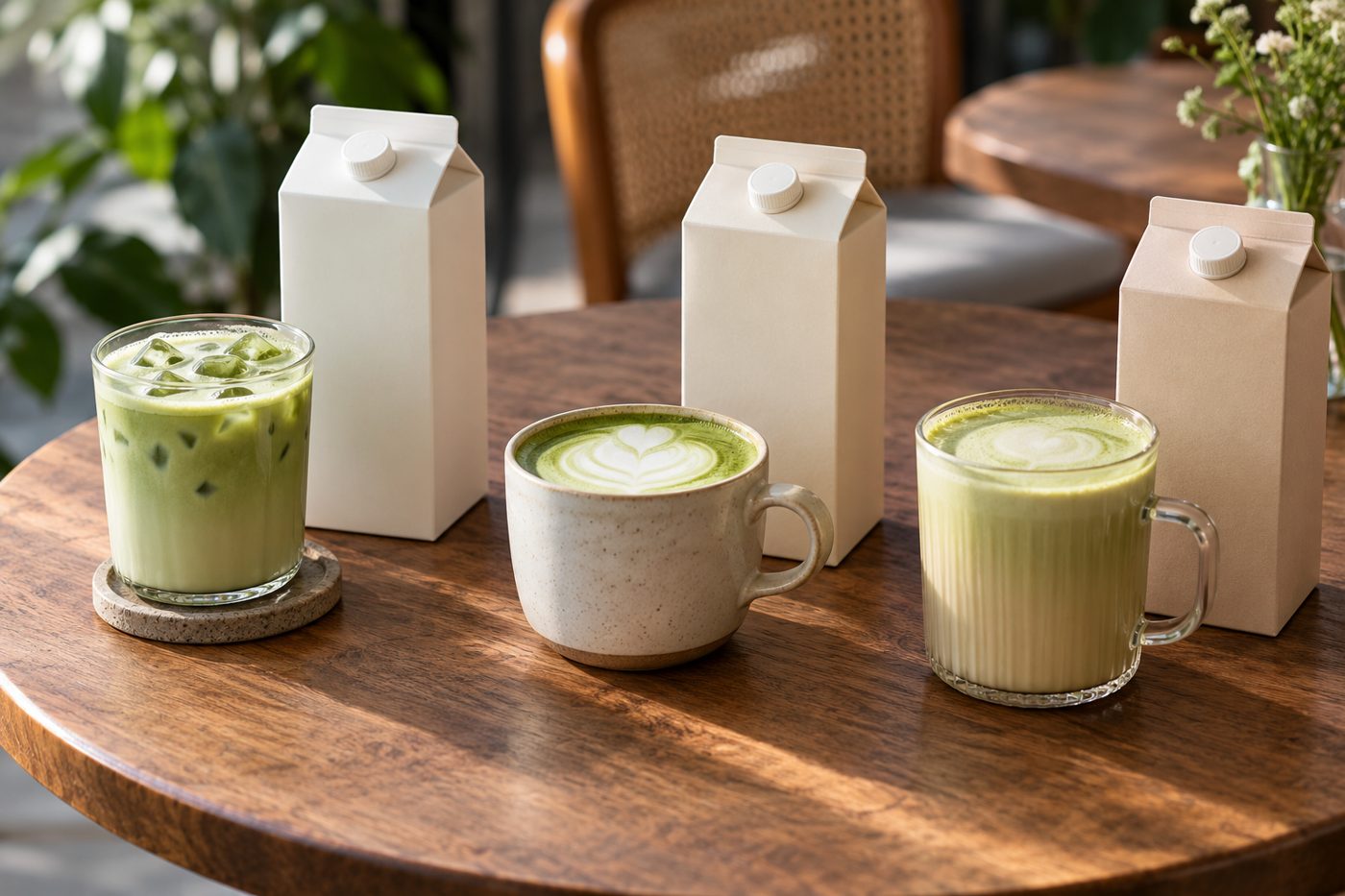
- Whole dairy milk: Creamy and sweet; supports rich, umami-forward matcha.
- Oat milk: Popular and naturally sweet; can mute delicate aroma, so a matcha with a crisper finish often works well.
- Almond milk: Lighter body; lets more matcha flavor through but can taste thin.
- Soy milk: Higher protein; good foam, but flavor can compete.
Test your matcha in each milk you offer and adjust the dose if needed.
Building the drink
Hot latte: Prepare the matcha base, steam the milk to around 60 to 65 °C, and pour the milk into the base, or the base into the milk for a layered look.
Iced latte: Shake or whisk the base, pour over ice and cold milk. Iced drinks show color clearly, so fresh, vivid matcha makes a visible difference.
Calculating cost per cup
Matcha cost per cup = price per kg × grams per drink ÷ 1,000.
| Price per kg | 2 g per drink | 3 g per drink | 4 g per drink |
|---|---|---|---|
| $150 | $0.30 | $0.45 | $0.60 |
| $200 | $0.40 | $0.60 | $0.80 |
| $300 | $0.60 | $0.90 | $1.20 |
Add milk, sweetener, cup, and labor to get your full cost. The prices above are illustrative; use your own supplier quotes.
Consistency checklist
- Weighed dose, written recipe, and photos of the target color
- Daily check of matcha color and aroma
- Opened matcha used within a few weeks
- Matcha stored away from the espresso machine's heat
Frequently asked questions
Q: Why does my matcha latte taste bitter?
A: Common causes are water that is too hot, too high a dose, an older or lower-grade matcha, or insufficient sweetness to balance it.
Q: Why does the color turn brown?
A: Oxidation from old matcha, high heat, or concentrate held too long. Fresh matcha and lower water temperatures help.
Q: Should I sweeten matcha lattes by default?
A: It depends on your market. High-quality matcha is naturally sweeter, which lets many cafés reduce added sugar.
Sources and further reading: Origin Leaf Japan café guidance; cost examples are illustrative.
Serving matcha in your café or building a matcha brand? Origin Leaf Japan supplies first-flush, single-origin matcha from Suzuka, Mie, to cafés, retailers, distributors and food manufacturers, milled to order with a 5 kg minimum, 1 kg packs, and delivery in as little as 10 days. Request a quote or samples →
MORE IN G
For Cafés and Food Businesses
- 39 Launching a Private-Label Matcha Brand: Sourcing, Packaging and MOQ
- 38 Matcha in Food Manufacturing: Heat Stability, Color Retention and Formulation Tips
- 37 Single-Origin vs. Blended Matcha: Which Is Right for Your Business?
- 35 How to Choose the Right Matcha for Your Café: Ceremonial vs. Culinary