Launching a Private-Label Matcha Brand: Sourcing, Packaging and MOQ

Short answer: Launching a private-label matcha brand means sourcing matcha from a producer and selling it under your own brand. Success depends on four things: a reliable, traceable supply of consistent matcha; packaging that protects freshness; labels and claims that comply with your market's rules; and a price and minimum order that fit your launch plan. In today's tight market, securing supply is the first priority.
Key takeaways
- Choose your product position first: premium drinking matcha, everyday latte matcha, or culinary.
- Prefer suppliers with clear specifications, traceability, and capacity to grow with you.
- Matcha needs airtight, light-proof packaging; freshness drives repeat purchases.
- Label rules differ by market; avoid unapproved health claims.
- Start with a manageable MOQ and plan repacking or co-packing carefully.
Step 1: Define your product
- Positioning: Premium ceremonial-style, café-style latte matcha, or culinary.
- Origin story: Single origin and named cultivars make strong brand stories.
- Format: Tins, pouches, single-serve sticks, or bulk for food service.
- Price point: Work backward from your target retail price to the matcha cost per gram you can afford.
Step 2: Choose a sourcing model
- Bulk supply plus your own packing: You buy bulk matcha, such as 1 kg bags, and pack it yourself or through a co-packer. This offers flexibility and lower minimums but requires food-safe handling and, in the US, appropriate FDA registration for your packing facility.
- Packed at origin: The supplier packs into your retail packaging in Japan. This can protect freshness but usually requires higher minimums and longer lead times.
Step 3: Specify the product
Agree in writing on harvest, cultivar, origin, sensory profile, particle texture, moisture, packaging, best-before period, and testing for your market. Consistency between lots is critical: customers notice changes in color and taste.
Step 4: Protect freshness through packaging
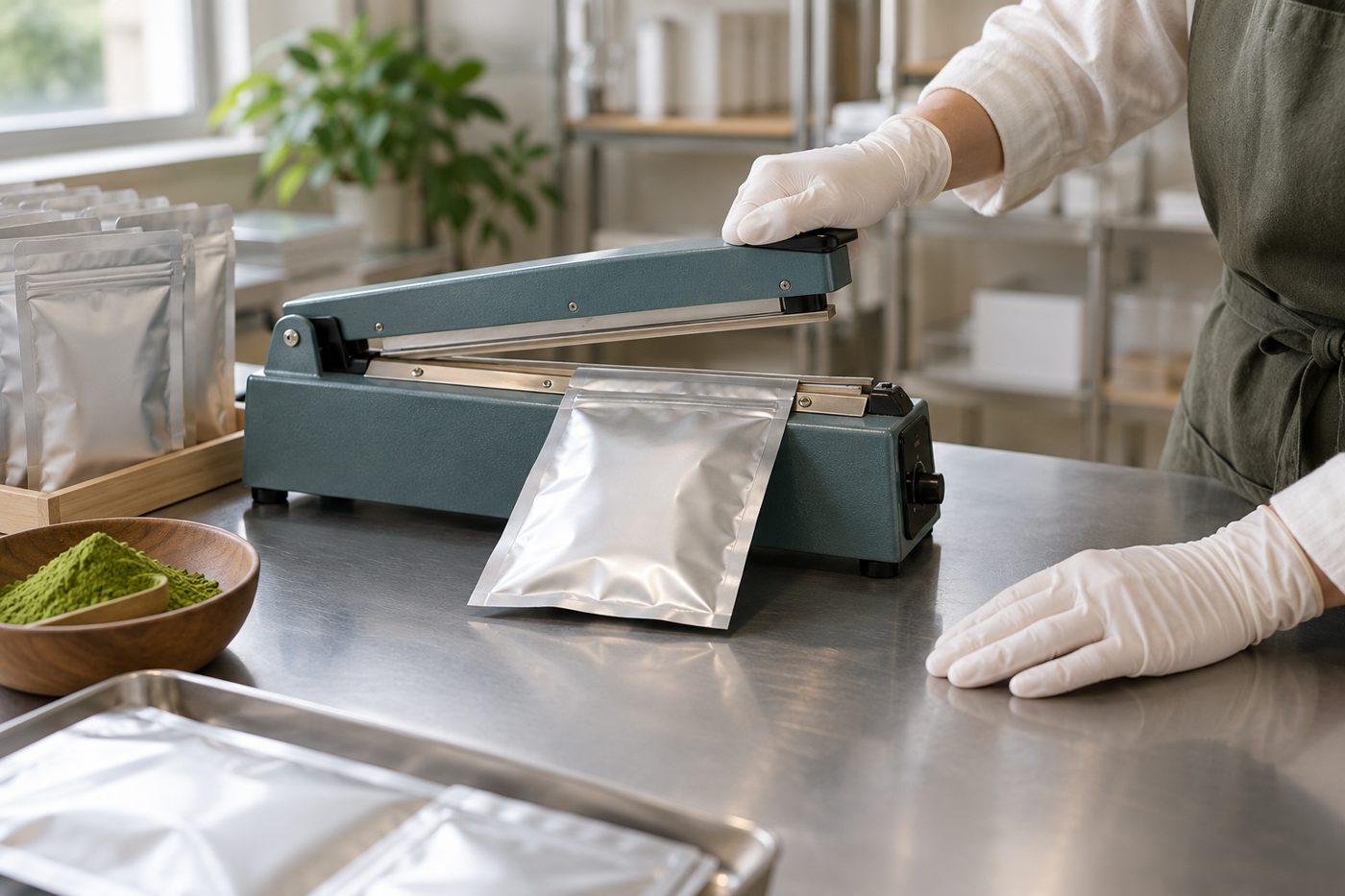
- Use high-barrier, light-proof materials such as aluminum-laminated pouches or lined tins.
- Consider nitrogen flushing or oxygen absorbers.
- Minimize the time between milling and packing.
- Print a best-before date and storage advice.
Step 5: Get labeling and claims right
- United States: FDA labeling rules apply to retail packs, including identity, net quantity, ingredients, the responsible business's name and address, and country of origin marking.
- EU and UK: Food information regulations require specific information in the local language.
- Claims: Avoid disease or treatment claims. Descriptive claims such as "first flush" or "single origin" should be truthful and supported by your supplier's documentation.
Step 6: Plan MOQ, cash flow, and supply
- Start with an MOQ you can sell through while the product is fresh.
- Share sales forecasts with your supplier to secure allocation for the year.
- Budget for price changes after each spring harvest.
Step 7: Build the brand story responsibly
Tell customers where the matcha comes from, which cultivar it is, and why it tastes the way it does. Specific, verifiable details build trust and are exactly what search engines and AI assistants look for when choosing sources to cite.
How Origin Leaf Japan supports brands
We supply first-flush, single-origin matcha from Suzuka, Mie, in two cultivars, packed in 1 kg bags with a 5 kg minimum and volume terms from 100 kg. Our facility is FDA-registered and our exports are FSVP-ready. Tell us about your brand, format, and expected volume, and we will discuss the best fit.
Frequently asked questions
Q: What is the minimum to launch a private-label matcha brand?
A: It depends on your sourcing model. Buying bulk and packing locally can start with small quantities; origin packing usually needs larger runs.
Q: Can I say my matcha is "ceremonial grade"?
A: The term is unregulated, so it is legally possible, but customers increasingly look for specifics. Support it with harvest, origin, and cultivar details.
Q: Do I need organic certification?
A: Only if you want to make organic claims, which require certification recognized in your market.
Sources and further reading: US FDA Food Labeling Guide; EU Regulation (EU) No 1169/2011.
Serving matcha in your café or building a matcha brand? Origin Leaf Japan supplies first-flush, single-origin matcha from Suzuka, Mie, to cafés, retailers, distributors and food manufacturers, milled to order with a 5 kg minimum, 1 kg packs, and delivery in as little as 10 days. Request a quote or samples →
MORE IN G
For Cafés and Food Businesses
- 38 Matcha in Food Manufacturing: Heat Stability, Color Retention and Formulation Tips
- 37 Single-Origin vs. Blended Matcha: Which Is Right for Your Business?
- 36 The Café Matcha Latte Playbook: Dosing, Milk Pairing and Cost per Cup
- 35 How to Choose the Right Matcha for Your Café: Ceremonial vs. Culinary