How to Choose the Right Matcha for Your Café: Ceremonial vs. Culinary

Short answer: Use ceremonial-style matcha for anything where matcha is the main flavor, such as straight matcha, matcha lattes, and signature drinks. Use culinary matcha where it is one ingredient among many, such as baked goods and heavily sweetened blended drinks. For most cafés, the difference in cost per latte is small compared with the difference customers taste.
Key takeaways
- Ceremonial-style matcha is typically first-flush, shaded, and finely milled; culinary matcha often uses later harvests and has a stronger, more astringent profile.
- In a latte that uses about 2 g of matcha, even a large price gap per kilogram translates into cents per cup.
- Milk can mask some bitterness but also dulls delicate aroma; the right choice depends on your menu and milk.
- Many cafés run two tiers: a drinking grade for the bar and a culinary grade for the kitchen.
How do the two types differ?
| Attribute | Ceremonial-style | Culinary |
|---|---|---|
| Typical harvest | First flush (spring) | Second flush or later, sometimes blended |
| Color | Bright, vivid green | Duller, olive or yellowish green |
| Taste | Sweet, rich umami, low bitterness | Stronger, more astringent, more bitter |
| Texture | Very fine, smooth | Can be coarser |
| Best uses | Straight matcha, lattes, signature drinks | Baking, ice cream, smoothies, sauces |
| Relative cost | Higher | Lower |
These are tendencies, not rules, because neither term is regulated. Always confirm the harvest and origin with your supplier.
What does the choice mean for cost per cup?
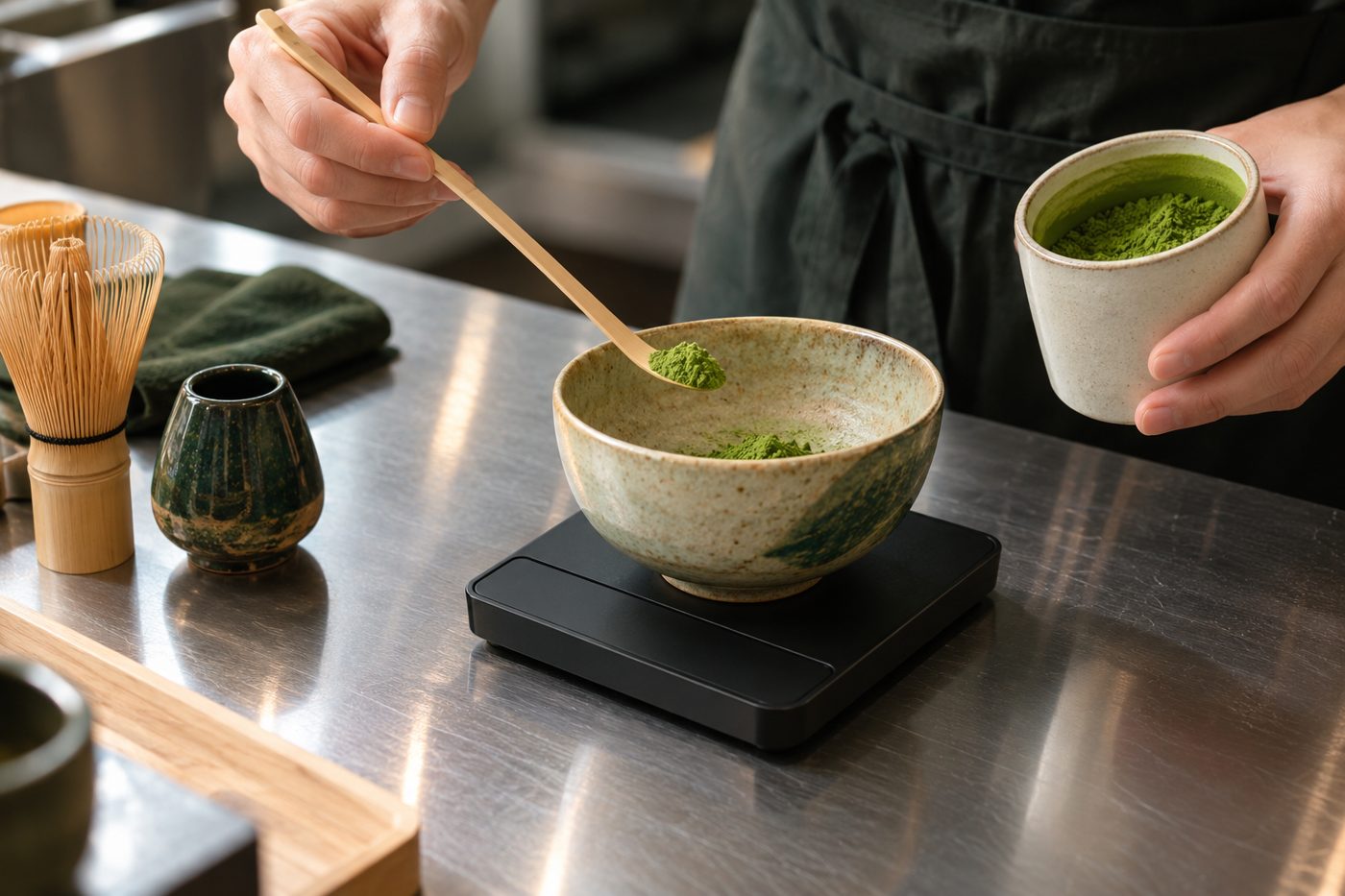
Matcha is used in small quantities, so the price per kilogram looks large but the cost per drink is modest. The calculation is simple: price per kilogram multiplied by grams per drink, divided by 1,000.
- At $150 per kg and 2 g per latte, matcha costs $0.30 per drink.
- At $300 per kg and 2 g per latte, matcha costs $0.60 per drink.
A $0.30 difference per drink is usually far smaller than the difference in perceived quality, repeat purchase, and the price a café can charge for a signature matcha drink. Run this calculation with your own recipe and supplier quotes.
Does milk change the answer?
Milk softens bitterness, so some cafés assume culinary matcha is fine in lattes. In practice, milk also flattens the fresh aroma that distinguishes good matcha, and lower grades can taste muddy and look dull in the cup. Oat milk and other plant milks bring their own sweetness and body that interact differently with matcha. Test your top-selling drink with both grades and your actual milk before deciding.
When culinary matcha makes sense
Culinary matcha is the right tool when heat, sugar, fat, and other flavors will dominate. In baked goods, the vivid color of high-grade matcha fades with heat anyway, and a stronger flavor can actually help matcha come through. For blended drinks with syrups and ice, a robust culinary grade can be more cost-effective.
A simple framework for café owners
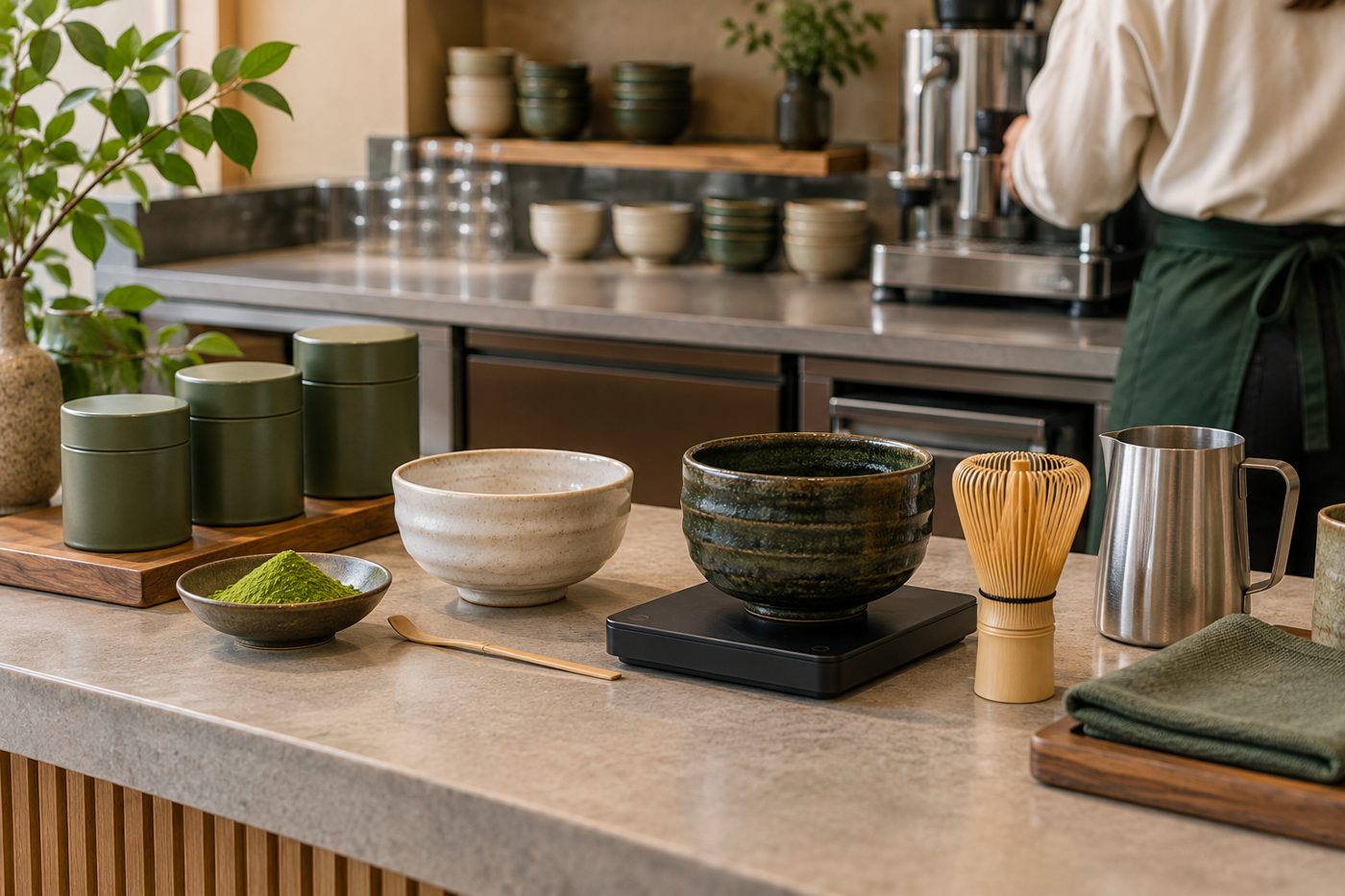
- Identify your hero drink. If your matcha latte is a signature item, use a drinking grade for it.
- Separate bar and kitchen. Keep a lower-cost grade for pastry and blended items if volumes justify it.
- Calculate cost per cup, not cost per kilogram.
- Taste test with your milk and your sweetener, side by side.
- Prioritize consistency. Customers notice when color and flavor change between batches.
What to look for in a café matcha supplier
- Consistency: The same color and flavor delivery after delivery, so your signature drink never changes.
- Transparency: Harvest, cultivar and origin stated clearly.
- Freshness: Milled close to shipment, with fast restocking.
- Practical pack sizes: 1 kg packs suit most cafés, balancing cost and freshness.
- Samples: The ability to test the exact product in your own recipe before committing.
- Supply security: A supplier that can plan volume with you through the year.
Frequently asked questions
Q: Can I use ceremonial matcha for baking?
A: Yes, but it is usually not cost-effective. Heat reduces color and aroma, so much of the premium you paid is lost.
Q: Why does my matcha latte look brown or dull?
A: Common causes are lower-grade or older matcha, oxidation from poor storage, or very hot water. Fresh, first-flush matcha whisked with water below boiling stays greener.
Q: How much matcha should a latte use?
A: Many cafés use between 2 g and 4 g per drink, depending on cup size and desired intensity. Standardize the dose so cost and taste stay consistent.
Sources and further reading: Café cost calculations are illustrative; use your own supplier pricing.
Serving matcha in your café or building a matcha brand? Origin Leaf Japan supplies first-flush, single-origin matcha from Suzuka, Mie, to cafés, retailers, distributors and food manufacturers, milled to order with a 5 kg minimum, 1 kg packs, and delivery in as little as 10 days. Request a quote or samples →
MORE IN G
For Cafés and Food Businesses
- 39 Launching a Private-Label Matcha Brand: Sourcing, Packaging and MOQ
- 38 Matcha in Food Manufacturing: Heat Stability, Color Retention and Formulation Tips
- 37 Single-Origin vs. Blended Matcha: Which Is Right for Your Business?
- 36 The Café Matcha Latte Playbook: Dosing, Milk Pairing and Cost per Cup