How to Spot High-Quality Matcha Before You Buy

Short answer: Good matcha is vivid green, smells fresh and sweet, tastes rich in umami with only mild bitterness, and feels silky rather than gritty. The fastest professional test is to whisk a small amount with water only and assess five factors: color, aroma, taste, texture, and how the color holds over a few minutes.
Key takeaways
- Color is the first signal: bright, vivid green suggests shading, early harvest, and freshness.
- Aroma should be fresh, sweet, and vegetal, never hay-like, flat, or stale.
- Taste should lead with umami and sweetness; harsh, lingering bitterness suggests lower grade or age.
- Texture should be fine and smooth; grittiness points to coarse milling or inclusion of stems.
Before you buy: what to check on the label or listing
You can screen out many poor products before opening a pack:
- Ingredients: Should say 100% matcha (green tea). Mixes with sugar or milk powder are not pure matcha.
- Harvest: First flush (first harvest) is the benchmark for drinking matcha.
- Origin: A named prefecture or region, ideally a named grower, rather than just "Japan" or no origin.
- Cultivar: Named cultivars, such as Okumidori or Yabukita, signal transparency.
- Dates: A best-before date, and ideally a milling or packing date.
- Packaging: Opaque, airtight, ideally nitrogen-flushed. Avoid clear packaging.
- Price per gram: Divide the price by the grams. Very cheap "ceremonial" matcha is a warning sign.
Once you have the matcha in hand, use the five sensory checks below.
1. Color
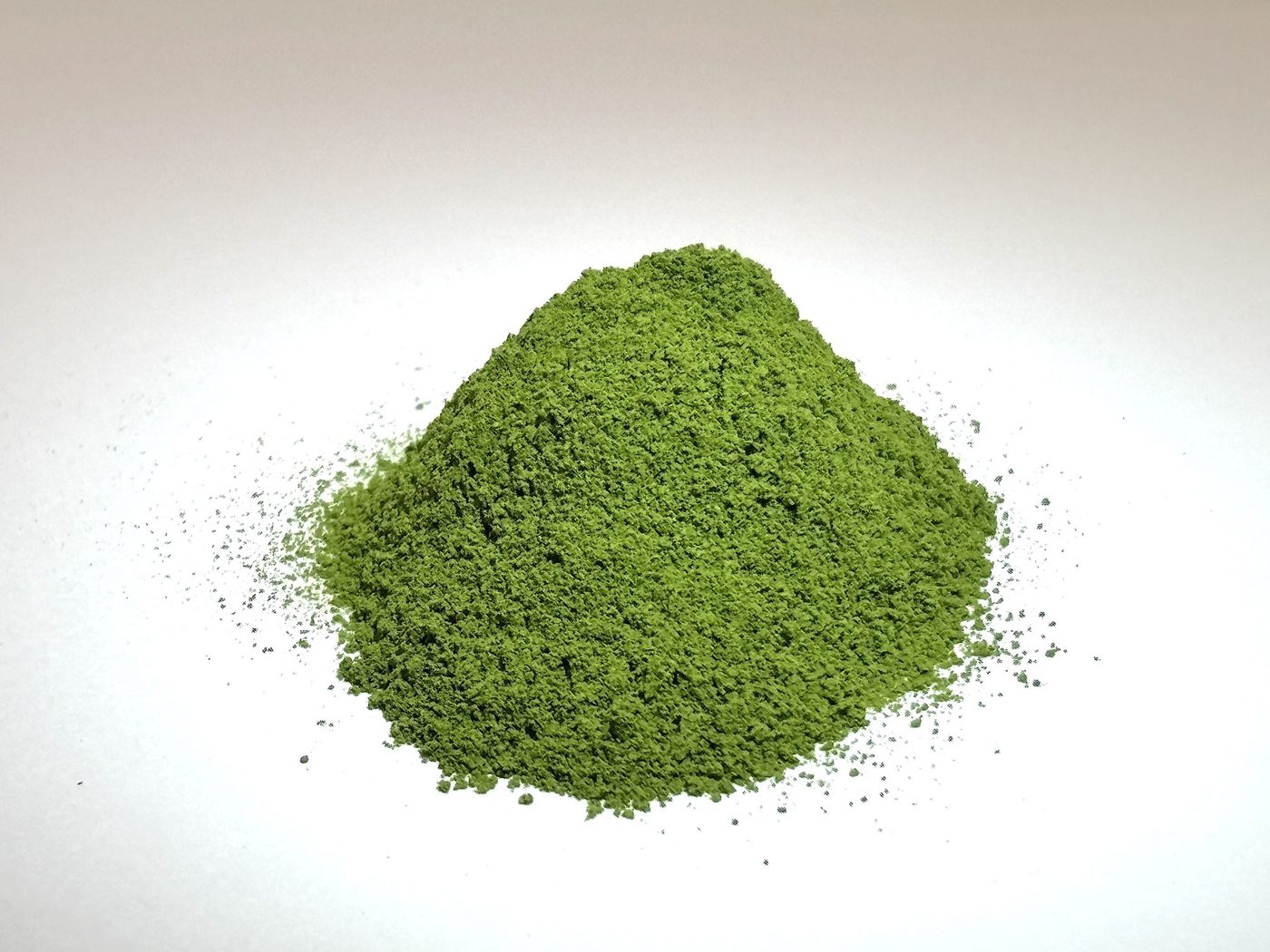
Spread a pinch of powder on white paper and press it flat with a spatula. High-quality first-flush matcha appears vivid, bright green. Dull olive, yellowish, or brownish tones can indicate later harvests, less shading, oxidation from age or poor storage, or heat damage during milling. After whisking, check the color of the liquid: it should remain green rather than turning brown within minutes.
2. Aroma
Open the package and smell the dry powder, then smell it again after whisking. Good matcha has a fresh, sweet, sometimes marine or creamy aroma. Shaded tea often has a distinctive soft, green scent. A flat, dusty, or hay-like smell suggests the matcha is old or has been exposed to air.
3. Taste
Whisk about 2 g with 60 to 70 ml of water at 70 to 80 °C. Taste for:
- Umami: a savory, brothy depth from amino acids.
- Sweetness: a natural, lingering sweetness.
- Bitterness and astringency: present but restrained, and it should not dominate the finish.
- Balance and length: a clean, pleasant aftertaste.
4. Texture and particle size
Rub a little powder between your fingers. It should feel silky, like fine cosmetic powder. Grittiness suggests coarse milling, stems, or poor sifting. In the cup, well-milled matcha suspends evenly and produces a fine, stable foam. Matcha particle size is commonly cited in the range of a few microns to around 20 microns; finer and more uniform particles feel smoother and suspend better. If particle-size data is important to your application, ask your supplier for it.
5. Foam and stability
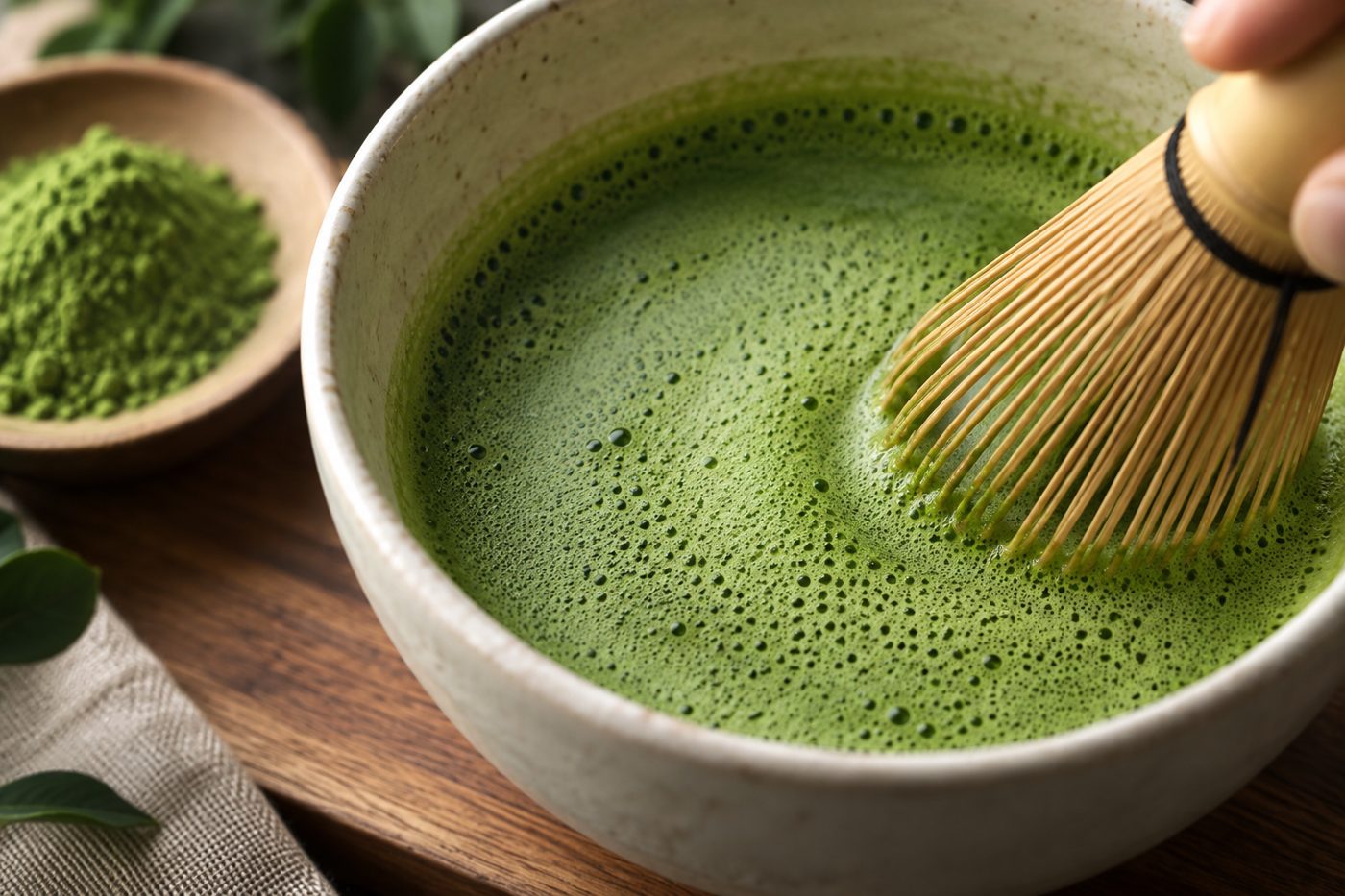
Whisked properly, good matcha forms a fine, creamy layer of small bubbles. Large, quickly collapsing bubbles can result from technique, but consistently poor foam can also reflect older or lower-grade powder.
Common warning signs
- Unusually low price for a "ceremonial" label.
- No harvest, origin, or cultivar information.
- Dull color combined with a strong bitter finish.
- Packaging that is clear, not airtight, or lacks a production or best-before date.
- Clumping that suggests moisture exposure.
How professionals evaluate at scale
For wholesale purchasing, sensory evaluation should be paired with documentation: harvest year, cultivar, origin, processing and milling details, food-safety registration, and residue testing for your market. Evaluate the same lot that will be shipped, and keep a retained sample from each delivery to check consistency over time.
At Origin Leaf Japan, every lot is evaluated for color, aroma, umami, bitterness, and texture before shipment, and samples are available to qualified wholesale buyers.
Frequently asked questions
Q: Can I judge matcha in a latte?
A: It is harder. Milk masks bitterness and aroma. Always taste with water first, then in your recipe.
Q: Does color always mean quality?
A: It is a strong indicator but not proof. Some processes can make color appear greener. Combine color with aroma, taste, and documentation.
Q: Why does my matcha taste more bitter than before?
A: Possible causes include water that is too hot, an older or oxidized batch, a different harvest, or an incorrect dose.
Sources and further reading: Global Japanese Tea Association; Japanese Tea Instructor training materials.
Serving matcha in your café or building a matcha brand? Origin Leaf Japan supplies first-flush, single-origin matcha from Suzuka, Mie, to cafés, retailers, distributors and food manufacturers, milled to order with a 5 kg minimum, 1 kg packs, and delivery in as little as 10 days. Request a quote or samples →
MORE IN A
Matcha Fundamentals
- 09 How to Store Matcha to Protect Its Flavor and Color
- 08 Freshly Ground Matcha: Why Freshness Matters More Than You Think
- 06 Why Is Some Matcha $20 and Others $200?
- 05 First Harvest vs. Second Harvest Matcha: What's the Difference?