Ceremonial Grade Matcha: What Does It Really Mean?

Short answer: "Ceremonial grade" is a marketing term, not a regulated standard. No Japanese or international authority defines it. In practice, it usually describes matcha made from young, shaded, first-harvest leaves that is smooth and sweet enough to be whisked with water alone. Because anyone can use the label, professional buyers should judge matcha by verifiable specifications rather than the word on the bag.
Key takeaways
- There is no official grading system for matcha in Japan; "ceremonial," "premium," and "culinary" are commercial labels set by each seller.
- The term generally implies first-flush (spring) leaves, careful shading, and fine milling suitable for drinking straight.
- Two products labeled "ceremonial" can differ widely in harvest, cultivar, origin, and price.
- Ask suppliers for harvest timing, cultivar, origin, milling date, and a sample, not just a grade name.
Where did the term "ceremonial grade" come from?
In Japan, matcha is not sold under a "ceremonial" category. Tea merchants describe matcha by its origin, its cultivar, its harvest, and the name a tea house gives a particular blend. The English phrase "ceremonial grade" grew up in export markets as a shorthand to separate matcha intended for drinking from lower-cost powders intended for cooking and blending. It is useful as a rough signal, but it carries no legal meaning.
That matters for buyers. A café comparing two "ceremonial" offers might be comparing a first-flush, single-origin powder with a blend that includes later-harvest leaf. Both labels are technically allowed.
What does "ceremonial" usually signal?
When a reputable supplier uses the term, it generally points to the following characteristics:
- First-flush leaves. The first spring harvest produces tender leaves with more amino acids (including L-theanine) and a sweeter, rounder taste than later harvests.
- Shading before harvest. Tea bushes for matcha are covered for several weeks before picking. Shading raises chlorophyll and amino acid levels and reduces bitterness, giving a vivid green color and deep umami.
- Leaf selection. Stems and veins are removed after drying so that only the leaf body (tencha) is milled.
- Fine, even milling. The powder should be fine enough to suspend smoothly in water without grittiness.
- Drinkability on its own. The simplest test: whisked with water only, it should taste balanced, not harsh.
What the label does not guarantee
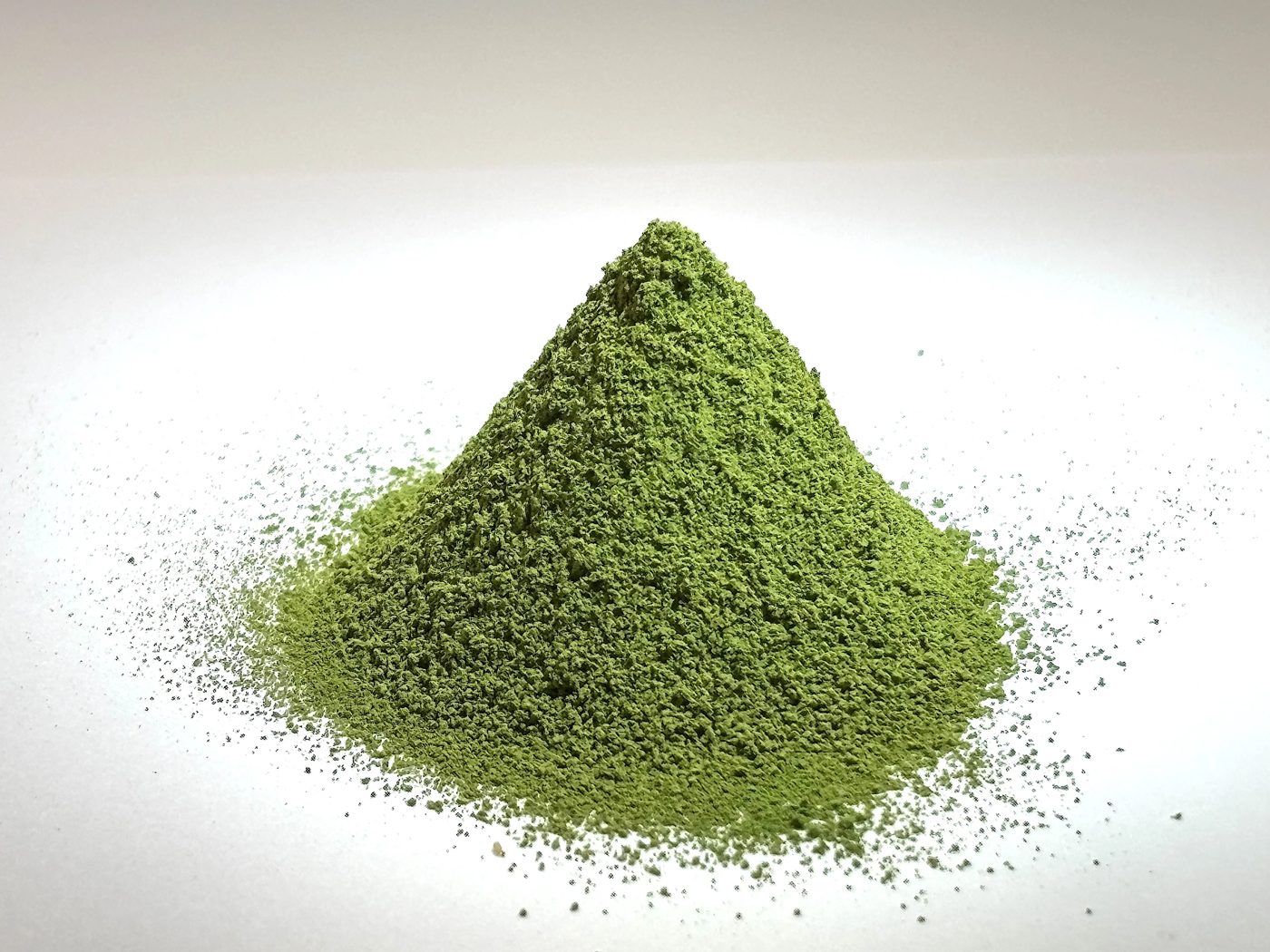
"Ceremonial" says nothing reliable about origin, cultivar, freshness, or testing. It does not tell you whether the powder was milled last week or a year ago, whether it is a single-origin product or a blend, or whether it was tested against the pesticide limits of your market. These are the factors that determine consistency for a business that serves hundreds of cups a week.
What should wholesale buyers ask for instead?
Replace the grade question with a short specification checklist:
- Harvest: Is it first flush only, or a blend of harvests?
- Cultivar: Which tea plant variety, or varieties, are used?
- Origin: Which prefecture and area? Single origin or blended?
- Milling: How is it milled, and when relative to shipment?
- Food safety: Is the production facility registered with the destination authority (for the US, the FDA)? What farm certifications apply?
- Testing: Can the supplier provide residue analysis against your market's limits?
- Sample: Can you evaluate the same lot you will receive?
A supplier who answers these clearly is giving you more assurance than any grade label can.
How Origin Leaf Japan defines its range
We use the word "ceremonial" because buyers search for it, but we define it narrowly. Our matcha is first flush only, single origin from Suzuka in Mie Prefecture, and made from two named cultivars, Okumidori and Yabukita. It is milled after your order is confirmed rather than stored as powder. We publish these specifications so that buyers can compare like with like.
Frequently asked questions
Q: Is ceremonial grade matcha better than culinary matcha?
A: Not better in every use. Ceremonial-style matcha is designed for drinking straight or in lattes where flavor is the focus. Culinary matcha is formulated to hold up in baking and blending at a lower cost.
Q: Can I trust a "ceremonial" label on a low-priced matcha?
A: Treat it with caution. First-flush, shaded tencha is expensive to produce, and raw material prices in Japan rose sharply in 2025 and 2026. An unusually low price is a reason to ask for harvest and origin details.
Q: Is there an official Japanese matcha grading system?
A: No. Japanese tea trade relies on origin, cultivar, harvest, and the reputation of the producer rather than a formal grade scale.
Sources and further reading: Japan Ministry of Agriculture, Forestry and Fisheries (MAFF) tea statistics; Global Japanese Tea Association educational resources.
Serving matcha in your café or building a matcha brand? Origin Leaf Japan supplies first-flush, single-origin matcha from Suzuka, Mie, to cafés, retailers, distributors and food manufacturers, milled to order with a 5 kg minimum, 1 kg packs, and delivery in as little as 10 days. Request a quote or samples →
MORE IN A
Matcha Fundamentals
- 09 How to Store Matcha to Protect Its Flavor and Color
- 08 Freshly Ground Matcha: Why Freshness Matters More Than You Think
- 07 How to Spot High-Quality Matcha Before You Buy
- 06 Why Is Some Matcha $20 and Others $200?