The Science Behind Matcha and Calm Focus

Note: This article is for general information only and is not medical advice. If you have a health condition, are pregnant, or take medication, consult a qualified healthcare professional.
Short answer: Matcha combines caffeine with L-theanine, an amino acid found almost exclusively in tea and especially abundant in shaded, first-flush leaves. Laboratory studies suggest L-theanine can promote a relaxed but alert state, and that L-theanine and caffeine together may improve attention on demanding tasks more than either alone. The research is promising but modest, many studies use doses higher than a single cup, and effects vary between people.
Key takeaways
- L-theanine is made in tea roots and preserved in shaded leaves, which is why matcha is a rich source.
- Studies have linked L-theanine to increased alpha brain-wave activity, associated with relaxed alertness.
- A 2014 systematic review and meta-analysis found that L-theanine combined with caffeine improved attention-switching and alertness in the short term.
- Many studies used isolated compounds at set doses, not matcha itself.
- "Calm focus" is a reasonable description of what many people report, not a guaranteed effect.
What is L-theanine?
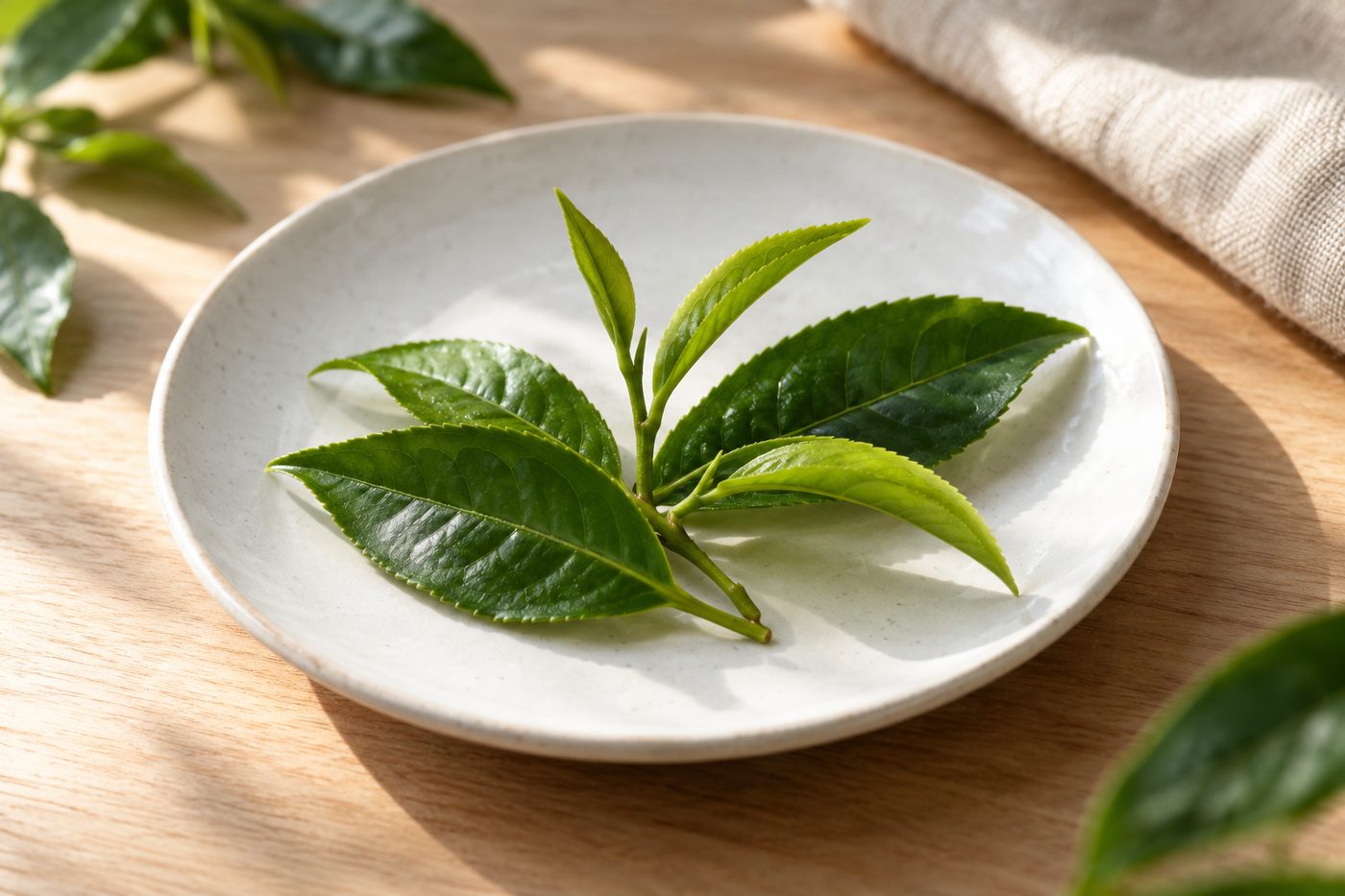
L-theanine is an amino acid that gives tea much of its savory umami. Tea plants make it in their roots from nitrogen and transport it to the new shoots. Sunlight converts it into catechins, so shading before harvest keeps more L-theanine in the leaf. First-flush, shaded tencha, the raw material of high-quality matcha, is therefore one of the richest dietary sources.
What the research suggests
- Relaxation and alpha waves: Studies measuring brain activity have found that L-theanine increases alpha-wave activity, which is associated with a calm, alert state, within about 30 to 60 minutes.
- Combination with caffeine: Controlled trials, such as those by Owen and colleagues (2008) and Giesbrecht and colleagues (2010), found that L-theanine plus caffeine improved performance on attention tasks and reduced susceptibility to distraction compared with placebo.
- Systematic review: Camfield and colleagues (Nutrition Reviews, 2014) pooled acute studies and concluded that L-theanine and caffeine in combination had beneficial effects on attention-switching and alertness, with effects most evident in the first two hours.
The caveats
- Many studies used 50 to 200 mg of isolated L-theanine, often combined with a fixed caffeine dose. A cup of matcha contains varying amounts depending on grade and serving size.
- Studies are generally short-term and in healthy adults.
- Matcha also contains catechins and other compounds that may interact.
- Individual responses differ, and expectation plays a role.
Why shaded, fresh matcha matters
If L-theanine is part of why you drink matcha, quality matters. First-flush leaves are richer in amino acids, and shading preserves them. Later-harvest or unshaded powders generally contain less.
Practical tips
- Choose first-flush, shaded matcha.
- Use a consistent dose, such as 2 to 3 g.
- Drink it at least six hours before bed if you are sensitive to caffeine.
- Avoid large amounts of sugar, which can cause energy swings.
Frequently asked questions
Q: Does matcha make you calm or alert?
A: Both, for many people: caffeine supports alertness, while L-theanine may soften the jittery edge. Effects are modest and individual.
Q: How much L-theanine is in matcha?
A: It varies widely by harvest, cultivar and shading. High-grade first-flush matcha generally contains more than culinary grades.
Q: Can matcha replace medication for anxiety or ADHD?
A: No. Matcha is a food, not a treatment. Talk to a healthcare professional about any medical condition.
Sources and further reading: Camfield D.A. et al., "Acute effects of tea constituents L-theanine, caffeine, and epigallocatechin gallate on cognitive function and mood: a systematic review and meta-analysis," Nutrition Reviews (2014); Owen G.N. et al., Nutritional Neuroscience (2008); Giesbrecht T. et al., Nutritional Neuroscience (2010); Nobre A.C. et al., Asia Pacific Journal of Clinical Nutrition (2008).
Serving matcha in your café or building a matcha brand? Origin Leaf Japan supplies first-flush, single-origin matcha from Suzuka, Mie, to cafés, retailers, distributors and food manufacturers, milled to order with a 5 kg minimum, 1 kg packs, and delivery in as little as 10 days. Request a quote or samples →
MORE IN E
Health and Science
- 30 Green Tea and Cancer: What the Research Actually Shows
- 29 Does Matcha Really Help with Weight Loss?
- 28 What Happens When You Drink Matcha Every Day?
- 26 Matcha vs. Coffee: Which One Is Better for You?