Green Tea and Cancer: What the Research Actually Shows

Note: This article is for general information only and is not medical advice. If you have a health condition, are pregnant, or take medication, consult a qualified healthcare professional.
Short answer: Green tea compounds, especially catechins such as EGCG, have shown anti-cancer activity in laboratory and animal studies, and some Japanese studies have linked high green tea consumption with lower cancer risk. But the overall evidence in humans is inconsistent. Systematic reviews, including a Cochrane review and Japanese evaluations, have found the evidence insufficient to conclude that green tea prevents cancer. Matcha is best enjoyed as a food, not relied on as protection against disease.
Key takeaways
- Laboratory studies show that green tea catechins can affect cancer cells, but these results do not translate directly to people.
- Human studies are mixed: some cohorts show lower risk for certain cancers, others show no association.
- In 2005, the US FDA concluded there was no credible evidence that green tea reduces the risk of several cancers and that it is highly unlikely to reduce breast or prostate cancer risk.
- A 2019 systematic review of Japanese studies rated the evidence for green tea and liver cancer as insufficient.
- Very hot beverages above 65 °C are classified by the IARC as probably carcinogenic, so let your tea cool slightly.
Why scientists became interested
Catechins, particularly EGCG, show antioxidant and anti-proliferative effects in cell and animal studies. Japan, with its high green tea consumption and relatively low rates of some cancers, became a natural setting for population research. An early study in Saitama Prefecture (Imai et al., 1997) reported that people drinking more than ten cups a day tended to develop cancer later than those drinking fewer.
What human studies show
- Cohort studies in Japan: Results vary by cancer type, sex and study. Some suggest lower risk for certain cancers in high consumers; many show no clear association.
- Systematic reviews: A Cochrane review of green tea for cancer prevention (Filippini et al., 2020) found the evidence inconsistent and of low certainty overall. A 2019 review of Japanese studies on liver cancer found a summary relative risk per cup of 0.99, effectively no association, and rated the evidence as insufficient.
- Regulatory view: In 2005, the US FDA reviewed the evidence in response to a health-claim petition and concluded there was no credible evidence that green tea reduces the risk of gastric, esophageal, ovarian, pancreatic or combined cancers, and that it was highly unlikely to reduce breast or prostate cancer risk. It allowed only a very limited qualified claim.
Why results are hard to interpret

- Confounding: Tea drinkers may differ in diet, smoking, activity and other habits.
- Measurement: Studies often rely on self-reported cups, which vary in strength.
- Dose: Laboratory concentrations of catechins can be far higher than what reaches tissues from drinking tea.
One evidence-based caution: temperature
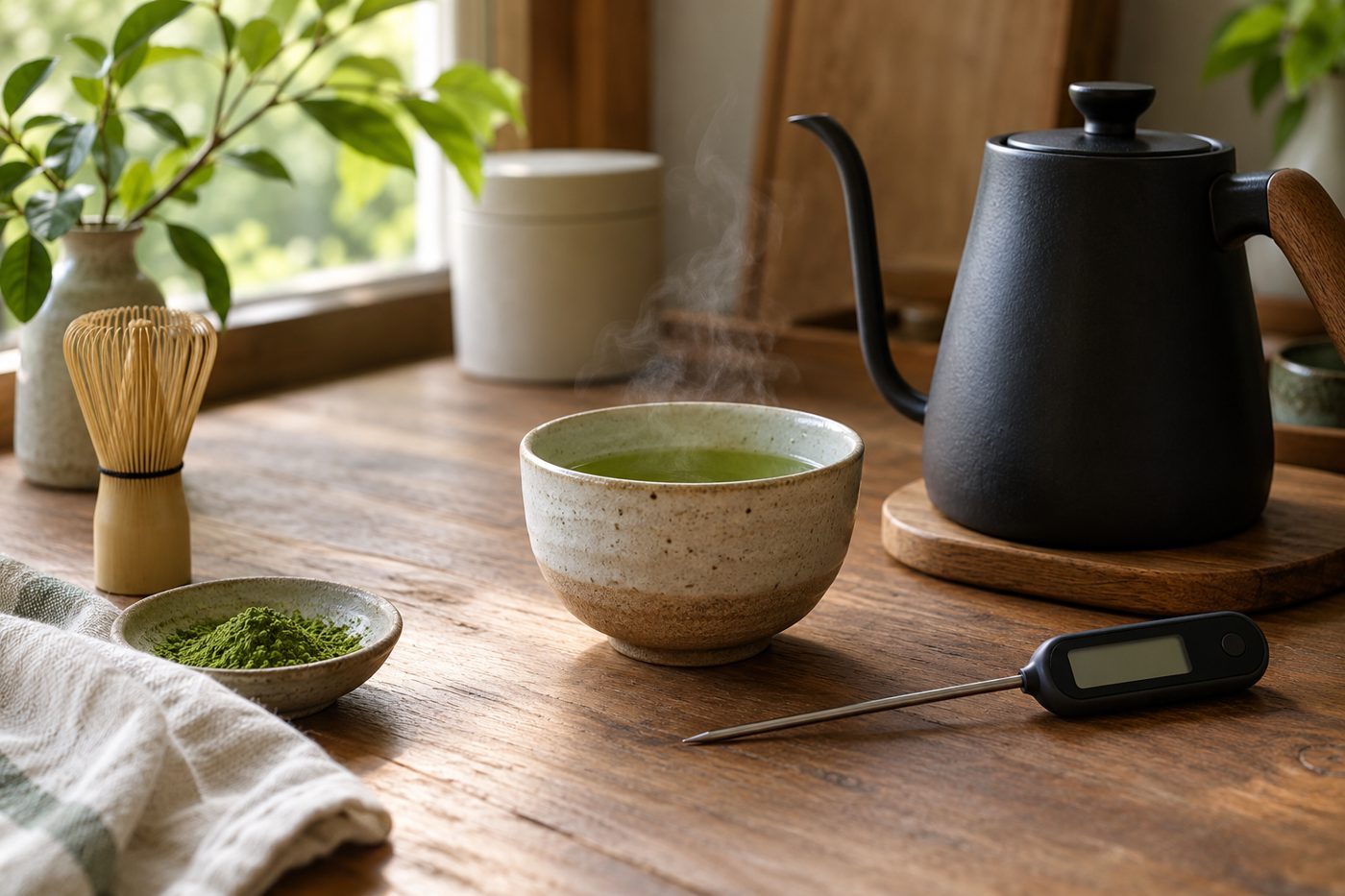
The International Agency for Research on Cancer (IARC) classifies drinking very hot beverages, above 65 °C, as probably carcinogenic to humans (Group 2A), based mainly on esophageal cancer. Matcha is traditionally prepared with water around 70 to 80 °C and cools quickly in the bowl, but it is sensible to let any hot drink cool before sipping.
How to think about matcha and health
Matcha can be part of a healthy lifestyle: it is low in calories when unsweetened and contains interesting compounds. But it should not be considered cancer prevention or treatment. Not smoking, limiting alcohol, maintaining a healthy weight, being active, eating plenty of vegetables and fruit, and attending recommended screenings have much stronger evidence.
Frequently asked questions
Q: Does matcha prevent cancer?
A: There is no reliable evidence that it does. Research is ongoing.
Q: Is matcha safe for people undergoing cancer treatment?
A: Green tea compounds may interact with some treatments. Patients should consult their oncology team before consuming large amounts or supplements.
Q: Are green tea supplements better than matcha?
A: Not necessarily. High-dose extracts carry their own risks, including possible liver stress at high EGCG intakes.
Sources and further reading: US FDA, letter responding to the qualified health claim petition on green tea and cancer (2005); Filippini T. et al., "Green tea (Camellia sinensis) for the prevention of cancer," Cochrane Database of Systematic Reviews (2020); systematic review of coffee, green tea and liver cancer among the Japanese population, Japanese Journal of Clinical Oncology 49(10): 972–984 (2019); Imai K. et al., Preventive Medicine (1997); IARC Monographs Volume 116 (2018).
Serving matcha in your café or building a matcha brand? Origin Leaf Japan supplies first-flush, single-origin matcha from Suzuka, Mie, to cafés, retailers, distributors and food manufacturers, milled to order with a 5 kg minimum, 1 kg packs, and delivery in as little as 10 days. Request a quote or samples →
MORE IN E
Health and Science
- 29 Does Matcha Really Help with Weight Loss?
- 28 What Happens When You Drink Matcha Every Day?
- 27 The Science Behind Matcha and Calm Focus
- 26 Matcha vs. Coffee: Which One Is Better for You?