A Guide to Japanese Matcha Cultivars

Short answer: A cultivar is a specific variety of the tea plant, Camellia sinensis, selected and propagated for its characteristics. Just as grape variety shapes wine, cultivar shapes matcha's color, sweetness, bitterness, and aroma. Japan grows dozens of registered tea cultivars; a handful are especially important for matcha, including Yabukita, Okumidori, Saemidori, Samidori, and Asahi.
Key takeaways
- Most Japanese tea is grown from cloned cultivars, which gives consistent character from field to field.
- Yabukita is Japan's most widely planted cultivar, covering about 62% of tea area; Okumidori, Saemidori, Samidori, and Asahi are prized for matcha.
- Single-cultivar matcha offers a distinct, repeatable profile; blends offer balance and supply flexibility.
- For a business, the best cultivar is the one that fits your drink, your milk, and your supply needs.
Why do cultivars matter?
Japanese tea fields are mostly planted with cuttings from registered cultivars rather than seedlings. Because every plant in a field is genetically identical, the cultivar has a strong and predictable influence on the tea. Cultivars differ in when they bud in spring, how they respond to shading, their natural levels of amino acids and catechins, their leaf color, and their resistance to frost and disease.
Major cultivars used for matcha
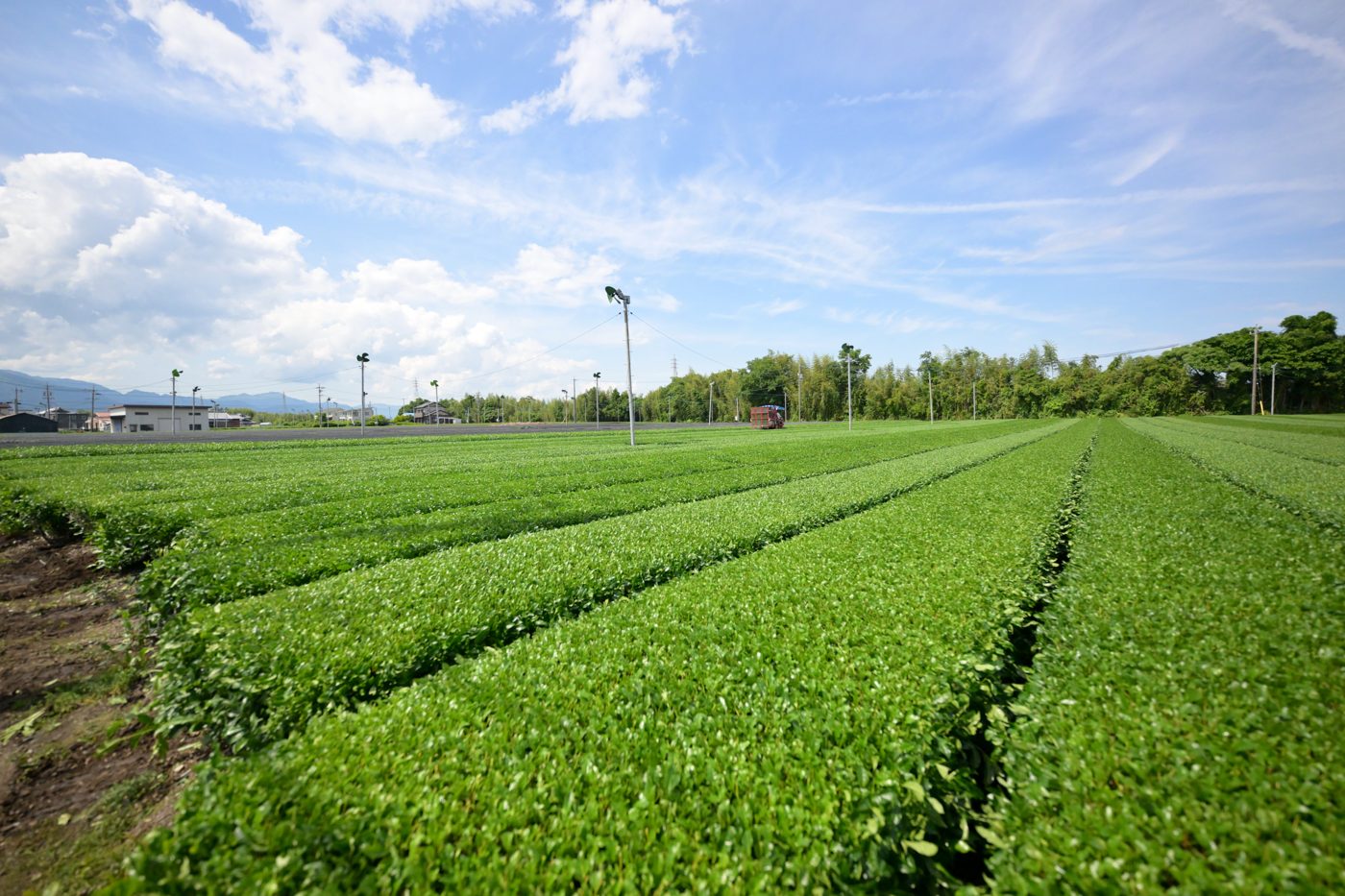
Yabukita. Selected in Shizuoka in the early twentieth century and registered in 1953, Yabukita became the backbone of Japanese tea and still covers about 62% of Japan's tea cultivation area. It is hardy and reliable. In matcha, it gives a classic, balanced profile with a clean, slightly sharp finish.
Okumidori. A later-budding cultivar descended from Yabukita, registered in the 1970s. Okumidori is known for deep green color and responds well to shading, which makes it popular for tencha and shaded teas. It tends to produce rich, smooth matcha with gentle bitterness.
Saemidori. An early-budding cultivar developed from Yabukita and Asatsuyu. It is valued for vivid green color and pronounced sweetness and umami, though it is more vulnerable to spring frost.
Samidori. A traditional Uji cultivar used for high-grade matcha and gyokuro, known for strong umami and depth.
Asahi. Another Uji cultivar, highly regarded for top-grade matcha because of its elegant aroma and sweetness, and grown in limited quantities.
Other cultivars, such as Gokou, Tsuyuhikari, and Yutakamidori, also appear in matcha, often in blends.
Single cultivar vs. blended matcha
Many traditional matcha products are blends of several cultivars and fields, combined by a tea master to achieve a house style. Single-cultivar matcha comes from one variety, which makes its character easier to describe and repeat. For a café or brand, single-cultivar matcha makes menu storytelling simpler and makes it easier to keep a signature drink consistent over time.
How to choose a cultivar for your business
- Define the drink. Straight matcha highlights aroma and sweetness; lattes need body and color that survive milk.
- Decide on flavor direction. Rich and mellow, or sharp and refreshing?
- Consider supply. Widely planted cultivars are easier to source at volume; rare cultivars may be limited.
- Taste side by side with your recipe.
Origin Leaf Japan offers two first-flush, single-origin cultivars from Suzuka, Mie: Okumidori, which is rich and expressive with low bitterness, and Yabukita, which is rich with a sharper, refreshing finish. See our cultivar comparison for full specifications.
Frequently asked questions
Q: Which cultivar makes the best matcha?
A: There is no single best. Okumidori, Saemidori, Samidori, and Asahi are often praised for drinking matcha, while Yabukita is valued for balance and reliability. Fit to your use matters more than reputation.
Q: Is a single-cultivar matcha always higher quality?
A: Not automatically. It is more transparent and consistent in character, but quality still depends on harvest, shading, processing, and freshness.
Q: Why is Yabukita so common?
A: Its hardiness, yield, and dependable flavor made it the preferred cultivar for Japanese growers for decades.
Sources and further reading: Breeding Science, review of tea breeding in Japan (2026); National Agriculture and Food Research Organization (NARO) cultivar registration records; Japan Ministry of Agriculture, Forestry and Fisheries.
Serving matcha in your café or building a matcha brand? Origin Leaf Japan supplies first-flush, single-origin matcha from Suzuka, Mie, to cafés, retailers, distributors and food manufacturers, milled to order with a 5 kg minimum, 1 kg packs, and delivery in as little as 10 days. Request a quote or samples →
MORE IN B
Cultivars, Cultivation and Craft
- 15 Why Japanese Tea Tastes Different from Chinese Tea
- 14 Why Stone-Milled Matcha Tastes Better: The Science of Particle Size Distribution
- 13 Why Fertilizer Unlocks a Tea Cultivar's Full Potential
- 12 A Short History of Tea Plant Breeding in Japan