Why Japan Turned Tea into an Art Form: Chanoyu and Wabi-Sabi

Short answer: In Japan, preparing and drinking tea became an art because tea masters used it to express a whole philosophy of life: hospitality, attention to the moment, respect for simple natural materials, and beauty found in imperfection. The tea ceremony, chanoyu or chado ("the way of tea"), combines architecture, ceramics, flowers, calligraphy, food and seasonal awareness. At its heart is the aesthetic of wabi-sabi, the beauty of things that are modest, imperfect and impermanent.
Key takeaways
- Chanoyu is a choreographed gathering in which a host prepares matcha for guests.
- Sen no Rikyu's principles are harmony (wa), respect (kei), purity (sei) and tranquility (jaku).
- Wabi is quiet, rustic simplicity; sabi is the beauty of age and wear.
- Ichigo ichie, "one time, one meeting," reminds participants that each gathering is unique.
- These ideas influence Japanese architecture, design, hospitality and even modern cafés.
What happens in a tea ceremony
In a formal gathering, guests enter a garden path, purify their hands and mouth, and enter a small tea room, sometimes through a low entrance that requires everyone to bow. The host cleans each utensil with deliberate movements, whisks matcha, and serves it with a seasonal sweet. Guests admire the bowl, the hanging scroll and the flowers. Every element is chosen for the season and the guests.
Why tea became an art
In the fifteenth and sixteenth centuries, tea gatherings shifted from displays of expensive Chinese objects to an intimate practice shaped by Zen Buddhism. Tea masters Murata Juko, Takeno Joo and especially Sen no Rikyu saw the simple act of making tea as a way to cultivate mindfulness and sincere hospitality. Rikyu built tiny tea rooms of only two tatami mats and favored humble, locally made utensils, such as Raku tea bowls, over imported treasures.
Rikyu's four principles
- Wa (harmony): between host and guests, people and nature, objects and season.
- Kei (respect): for others and for the objects used.
- Sei (purity): physical and spiritual cleanliness.
- Jaku (tranquility): the calm that comes from practicing the first three.
What is wabi-sabi?
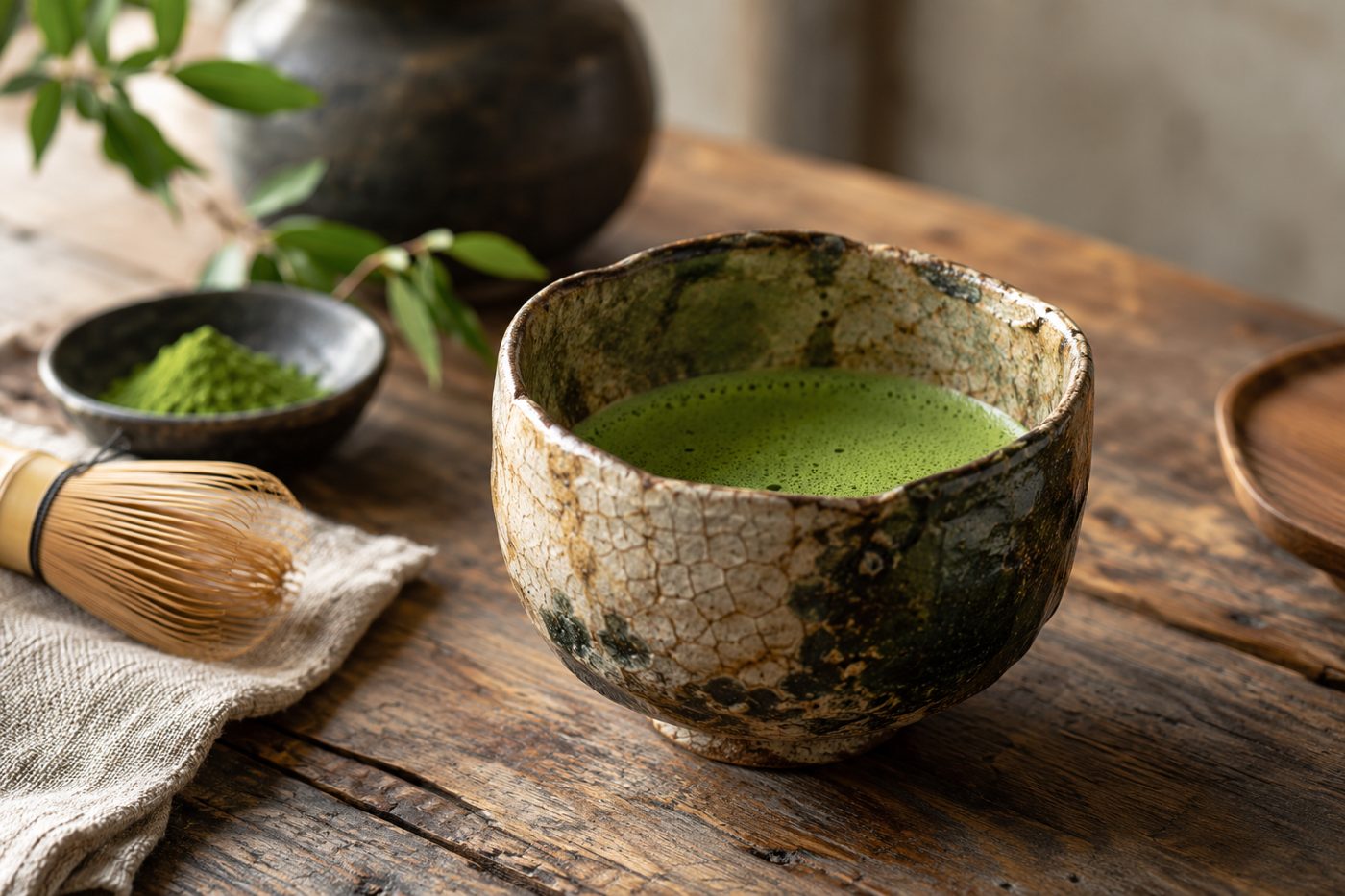
Wabi originally described the loneliness of living simply, away from society, and came to mean a quiet, understated beauty. Sabi refers to the beauty that comes with age: patina, wear and weathering. Together, wabi-sabi values the asymmetrical tea bowl, the cracked glaze, the moss on a stone, and the awareness that all things are impermanent. Kintsugi, the art of repairing broken ceramics with lacquer and gold, is a well-known expression of this sensibility.
Ichigo ichie: one time, one meeting
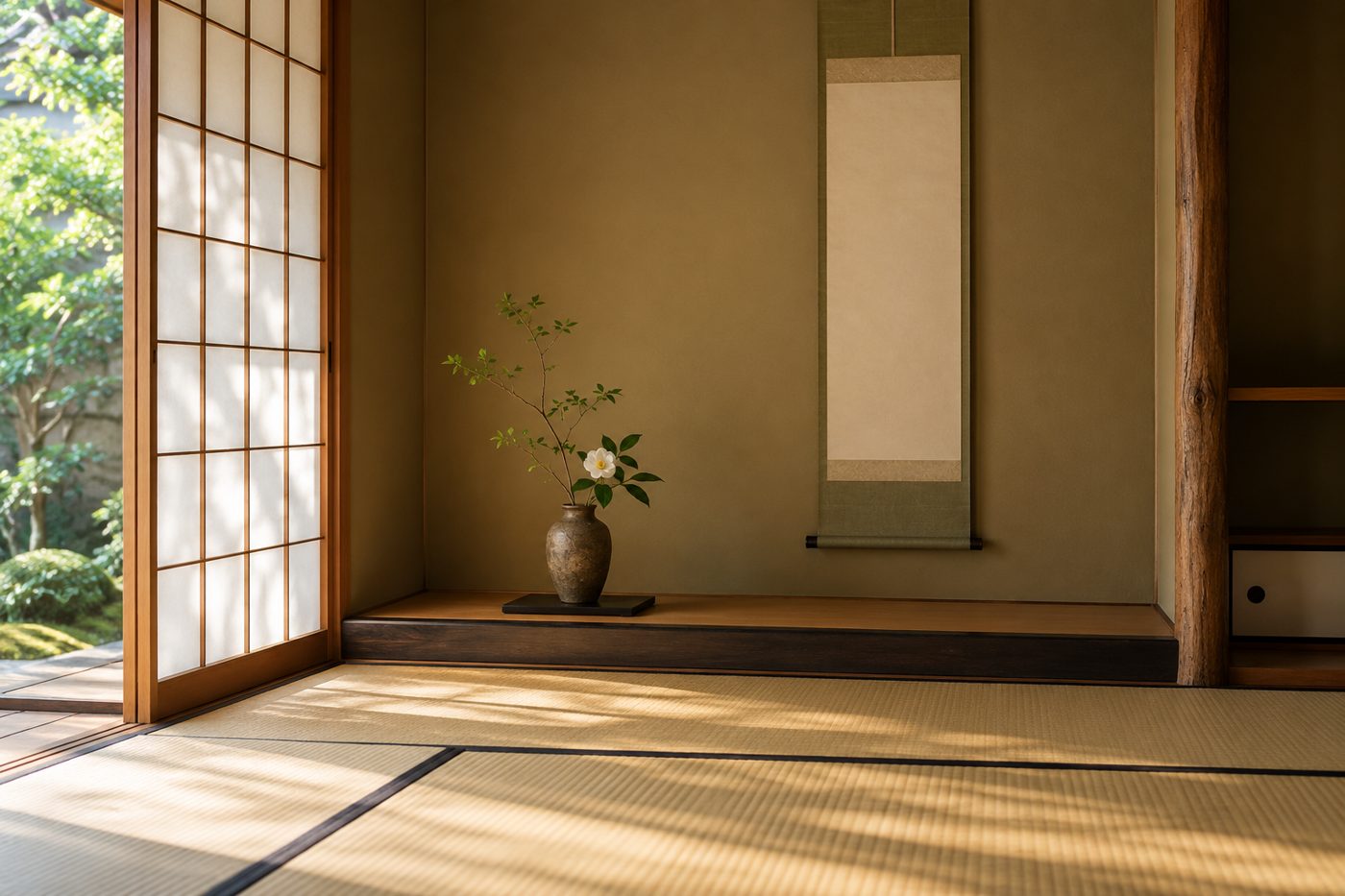
A saying associated with the tea ceremony, ichigo ichie reminds host and guests that this exact gathering will never happen again, so it deserves full attention and sincerity.
How these ideas live on
Japanese hospitality (omotenashi), minimalist architecture, seasonal cuisine and ceramics all carry traces of the tea ceremony. Many modern cafés in Japan and abroad borrow its elements: handmade bowls, a focus on the preparation itself and a calm atmosphere.
Frequently asked questions
Q: Do you need to study for years to enjoy matcha?
A: No. Formal tea practice takes years to master, but anyone can enjoy matcha with attention and care.
Q: Is wabi-sabi only about tea?
A: No. It is a broad Japanese aesthetic, but the tea ceremony was one of its most important expressions.
Q: What kind of matcha is used in the tea ceremony?
A: High-quality matcha prepared as usucha (thin tea) or koicha (thick tea). Koicha requires especially smooth, sweet matcha.
Sources and further reading: Urasenke and Omotesenke tea school educational materials; Global Japanese Tea Association.
Serving matcha in your café or building a matcha brand? Origin Leaf Japan supplies first-flush, single-origin matcha from Suzuka, Mie, to cafés, retailers, distributors and food manufacturers, milled to order with a 5 kg minimum, 1 kg packs, and delivery in as little as 10 days. Request a quote or samples →
MORE IN D